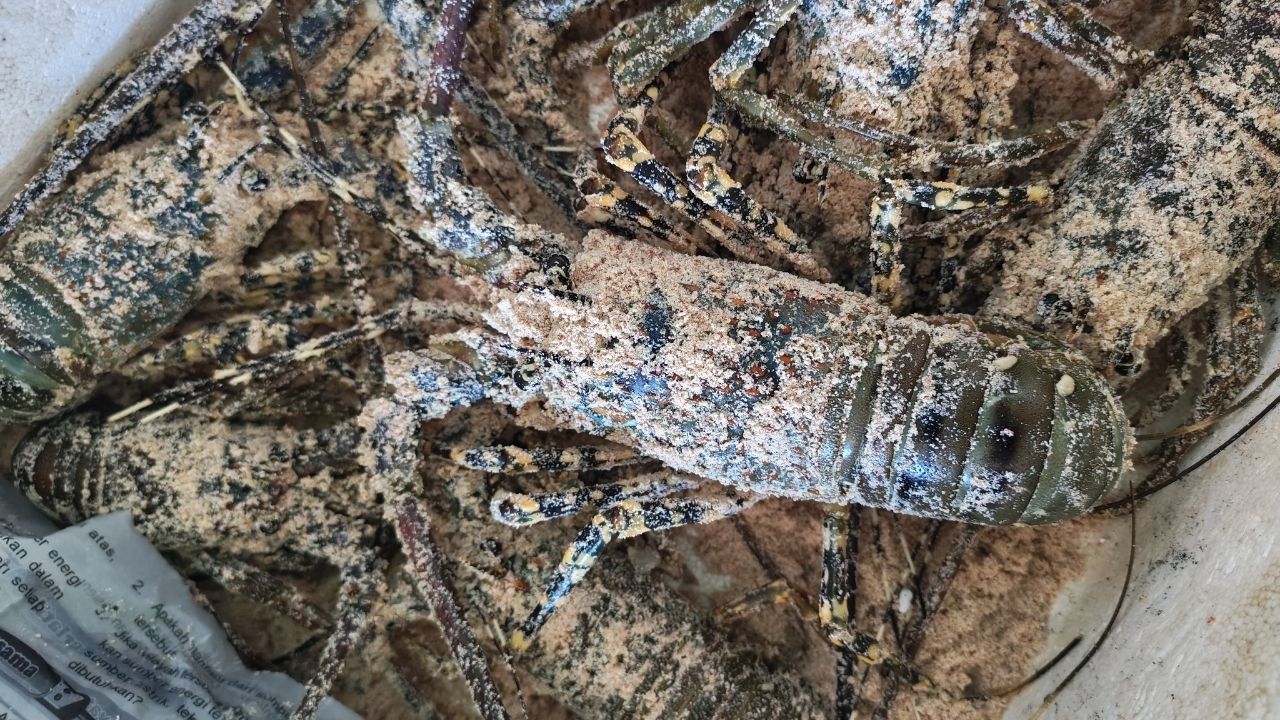

Despite possessing the world’s most abundant natural reserves of clear lobster seed, Indonesia’s coastal communities remain largely sidelined in a highly lucrative global aquaculture industry. A sharp structural paradox has allowed Vietnam to monopolize the economic windfalls of downstream cultivation, transforming Indonesian raw materials into a record-breaking export empire. Unraveling this disparity requires deconstructing the regulatory volatility, technological gaps, and logistical bottlenecks that have long paralyzed Indonesia's aquaculture potential.
Biologically known as the puerulus phase, clear lobster seed (BBL) represents a critical stage where transparent post-larval lobsters move toward shallow waters to settle. Indonesian waters naturally provide ideal oceanographic conditions to harbor millions of these seeds annually. Yet, this abundant natural resource has not translated into economic prosperity for the coastal communities that serve as seed-catching centers. Instead, extractive schemes focusing entirely on raw material exports have sacrificed the potential for domestic value addition.
Export performance data starkly validates Vietnam's dominance. In the first ten months of 2025, the value of Vietnam's lobster exports broke records at USD 712 million, recording a staggering surge of 135 percent compared to the same period the previous year. This market penetration was massively directed toward China, which absorbed a dominant portion of USD 702 million. Ironically, this billion-dollar industry driven by Vietnam is built upon the severe vulnerability of its basic raw material supply chain. The country imports 80 to 90 million lobster seeds annually, as their local wild catch can only meet approximately 10 percent of total domestic industrial needs. The majority of this massive supply deficit is covered through seed flows originating from Indonesian waters and other neighboring countries, utilizing both legal trade instruments and black market movements.
For Indonesia, this phenomenon perfectly demonstrates the loss of the macroeconomic multiplier effect. Every BBL exported beyond national borders without undergoing the domestic grow-out process represents a direct loss of jobs in the nursery sector, infrastructure manufacturing for marine cages, formulated feed factories, and the cold chain logistics ecosystem. Transforming the nation’s industrial architecture from a mere raw material supplier into a global aquaculture production giant demands a deep deconstruction of the structural variables that have hindered the sector's progress.
Regulatory traps and investment certainty
The most determinant factor inhibiting the leap of lobster industrialization in Indonesia is regulatory inconsistency and weak legal certainty. Over the last decade, trading policies for BBL and adult lobsters have frequently experienced extreme fluctuations following changes in managerial leadership at the ministerial level. The regulatory flow has swung wildly like a pendulum: moving from total export bans to opening export valves through controversial regulations, shifting to the determination of catch quota schemes, and entertaining discourses on foreign investor partnerships.
This policy volatility creates a severe distortion of risk perception in the eyes of institutional investors and local business actors. Lobster cultivation, which requires high Capital Expenditure (CapEx) for modern infrastructure, intrinsically demands a stable, long-term investment climate. Uncertainty regarding the sustainability of the local seed supply and trade legality naturally forces cultivators to hold back, triggering long-term stagnation in the use of highly inefficient traditional infrastructure.
Conversely, Vietnam's success in seizing global market hegemony rests on a highly linear and predictable policy architecture. The Vietnamese government does not formulate reactive policies; instead, it projects a long-term roadmap through the National Aquaculture Development Strategy extending to 2030. This strategy officially targets cultivated lobster production to reach 2,200 metric tons (2,425 tons) with an economic valuation reaching trillions of Dong. This integrated policy provides ironclad legal guarantees for coastal cultivators, facilitates water zoning legality, and meticulously engineers the imported seed supply chain ecosystem to align with the absorption capacity of regional cultivation centers.
However, a crucial momentum for improving the Indonesian aquaculture climate began to appear with the enactment of the Minister of Marine Affairs and Fisheries Regulation (Permen KP) Number 5 of 2026. This latest regulation definitively closes the raw BBL export valve and recalibrates the industrial focus heavily toward domestic grow-out cultivation, setting a minimum weight requirement for exported cultivated lobsters of 50 grams (1.76 ounces).

This resolutive step forcibly retains raw materials within the country, instantly creating a massive domestic BBL supply for high-potential regions such as West Nusa Tenggara (NTB). With the absolute certainty that seeds will not be siphoned away by foreign export markets, cultivation business actors now possess a strong financial argument to dramatically escalate technological investment.
The nursery technology gap and deconstruction of survival rate (SR)
Marine lobster cultivation possesses a degree of biological technical complexity that far exceeds conventional crustacean or finfish commodities. The stage that serves as the single critical determinant of operational failure or success is the nursery phase. In this phase, BBL are acclimatized and carefully reared through highly vulnerable molting cycles until they reach a resilient juvenile size.
The primary metric defining the financial feasibility of an aquaculture venture is the Survival Rate (SR) the percentage of individual survival from the start of stocking to the final harvest. The SR level is inversely and exponentially related to the Cost of Production (HPP). In Vietnam, massive technological penetration allows farmers to consistently record SRs in the range of 60 percent to 80 percent during the nursery phase. Meanwhile, the vast majority of cultivation facilities in Indonesia remain locked in traditional nursery methods, which frequently produce suboptimal SRs below 30-40 percent.
This SR gap is deeply rooted in infrastructure divergence and mastery of environmental management. Cultivators in Vietnam have been systematically encouraged by state apparatuses to abandon wooden Floating Net Cages (KJA), which are prone to weathering, decay, and act as hosts for dangerous marine parasites. A structural transition was made toward using KJA fabricated from High-Density Polyethylene (HDPE). HDPE is a thermoplastic polymer with a very high strength-to-density ratio, possessing mechanical flexibility highly adaptive to dampening ocean wave energy, and it remains remarkably resistant to photochemical degradation from ultraviolet exposure. These advanced characteristics dramatically reduce the mechanical stress experienced by growing lobsters due to routine cage agitation.

Bamboo-based Floating Net Cages which currently remain the primary infrastructure utilized by local smallholder farmers for marine lobster cultivation in the coastal waters of Lombok: Banglele Indonesia
Beyond basic material innovation, the overriding variable dictating SR is the ability to disrupt deadly pathogens, where the highest threat currently comes from Milky Hemolymph Disease (MHD). This acute pathological disease is caused by a virulent intracellular pathogen resembling the Rickettsia bacterium (Rickettsia-like bacterium/RLB). The disease aggressively attacks mesodermal derivative tissues, systematically damages internal organ functions, and turns the hemolymph (lobster blood) into an opaque white liquid resembling milk. The hemolymph in acutely infected lobsters entirely loses its coagulation ability, leading to extreme lethargy, sudden cessation of appetite, and triggering cumulative mortality rates that can sweep 80 percent to 100 percent of the population within days.
The Vietnamese government actively mitigates this severe pathological risk through the operation of early warning environmental monitoring centers. These regional institutions are tasked with analyzing real-time movements in water quality parameters that could trigger bacterial population explosions, while directly providing access to massively subsidized pathogen treatments for farmers. Lobsters inherently demand a very precise range of oceanographic water parameters: ideal ambient temperature must be strictly maintained at 28-30°C (82.4-86°F), salinity must reflect full marine conditions at around 35 ppt, all supported by the unwavering stability of Dissolved Oxygen (DO) and acidity levels (pH).
In Indonesia, sudden fluctuations in coastal water parameters often go unmitigated. To exponentially boost SR, the nationwide adoption of Recirculating Aquaculture Systems (RAS) or advanced land-based recirculation tank systems for the early nursery phase becomes an absolute necessity. RAS systems safely isolate BBL from extreme weather anomalies of the open sea, filter invasive pathogens mechanically and biologically, and create absolute control over water quality before the more resilient young lobsters are eventually moved to marine grow-out cages.

A showcase of harvest-ready, consumption-sized marine lobsters that have successfully met commercial market standards. Each lobster is carefully sorted and prepared for direct distribution and sale from the aquaculture hub in the coastal area of Gerupuk, Lombok.: Banglele Indonesia
Feed management and FCR inefficiency
From a strict cultivation management accounting perspective, feed is by far the largest capital drain, representing 60 percent to 70 percent of total operational expenditures. For years, the operational foundation of lobster cultivation in Indonesia has been trapped in the alluring illusion of cheap trash fish availability. The continuous use of fresh non-target species such as low-value demersal species, small crabs, and shellfish is widely considered a natural, low-cost substitution for the lobster's carnivorous diet.
However, absolute dependence on trash fish yields a dangerous seasonal vulnerability. The availability of trash fish, which depends entirely on localized fisherman catches, is highly volatile, directly following hydrological cycles and harsh monsoon seasons. When high waves inevitably halt fishing activities, the feed supply is automatically cut off. Acute hunger within high-density cultivation cages rapidly triggers mass cannibalistic instincts among the stock, which instantly destroy the farm's survival rates.
Technically, the prolonged use of trash fish results in a highly irrational Feed Conversion Ratio (FCR). FCR is the core efficiency metric that formulates the ratio between the weight of feed provided compared directly to the increase in animal biomass. Clinical evaluations demonstrate that providing trash fish in the cultivation of sand lobsters (Panulirus homarus) and scalloped spiny lobsters (Panulirus ornatus) produces an FCR of 26.0 to 26.6. This alarming metric means more than 26 kilograms (57.3 pounds) of wet trash fish are needed to produce just 1 kilogram (2.2 pounds) of lobster meat.
This extreme operational inefficiency is not merely a financial issue but a direct trigger for secondary ecological crises. Unconsumed trash fish residues, combined heavily with lobster excretion, fall and naturally accumulate on the seabed. This dense accumulation of solid organic matter triggers fierce anaerobic decomposition processes that drastically deplete dissolved oxygen, severely increase Biochemical Oxygen Demand (BOD), and release highly toxic compounds such as ammonia and hydrogen sulfide into the water column. It is exactly this micro-ecosystem degradation that acts as the primary incubator for deadly explosions of the Rickettsia-like bacterium pathogen that causes MHD.
In direct response, the industrial ecosystem in Vietnam has begun to comprehensively integrate formulated pellet diets. Biochemical analysis of feed rigorously proves that lobsters require high protein intake balanced carefully with moderate carbohydrates, yet they possess a very low tolerance for lipids (fats). The maximum safe threshold for lipids in an ideal feed formulation is distinctly below 10 percent; this is biologically because lobsters cannot metabolize excess lipids, which instead actively hinders their rate of energy conversion into physical growth.
The systemic transition toward extrusion-technology pellet feed allows for the creation of water-stable feed. This specialized feed is designed not to disintegrate easily and pollute the water column before being consumed by lobsters, which naturally exhibit slow feeding habits. The rapid development of advanced aquatic-specific feed mills that formulate low-FCR pellets is an absolute prerequisite to eliminating seasonal feed vulnerabilities and fundamentally saving the ecology of Indonesia's coastal waters.
Industrial ecosystems, logistics, and FTAs
In modern global supply chain analysis, the price competitiveness of live marine commodities is not determined solely at the cultivation cage, but all along the logistics path to the final consumer's plate. Vietnam successfully engineered this profound competitive advantage by building highly concentrated, fully integrated industrial clusters. The central coastal regions of Vietnam, specifically Phu Yen and Khanh Hoa Provinces, are meticulously formatted as the nation's giant aquaculture engines. Astonishingly, Phu Yen Province alone in 2024 accommodated up to 177,000 cages with a production capacity exceeding 2,260 metric tons (2,491 tons) of high-value lobster. This immense geographical concentration creates vital economies of scale; where harvest collection costs, complex feed distribution, and heavy infrastructure installation can be systematically suppressed to a bare minimum.
In addition to intelligent spatial clustering, Vietnam possesses the unique geopolitical privilege of land borders and regional sea routes that are extremely close to the world's primary market, China. In the highly sensitive live seafood transport trade regime, shipping duration is exponentially proportional to the commodity's stress level and live transport mortality. The incredibly short distance radically minimizes these logistical death risks, expertly maintaining the premium quality of lobsters upon their arrival at high-end Chinese restaurants. Furthermore, Vietnam's comparative advantage is vastly strengthened by its government's agile maneuvers to capitalize on various Free Trade Agreements (FTAs), expertly exempting their products from the retaliatory high-tax tariffs that continually overshadow lobster suppliers from Western countries.
Turning attention back to the Indonesian fisheries constellation, the current production landscape is still tragically trapped in isolation and fragmentation. Potential cultivation centers are widely scattered from the waters of West Nusa Tenggara (NTB) and the coasts of Sulawesi Island, extending to the distant reaches of Sumatra. This extreme geographical fragmentation naturally presents a devastating freight cost trap. Equitable cold chain infrastructure and direct cargo flight routes specific to live marine commodities from collection points directly to destination countries remain very limited. Lobsters often must endure transit through various domestic hubs before finally being exported, resulting in unacceptable biomass weight shrinkage, severe surges in operational costs, and ultimately disrupting the viability of any profit margins.
Untangling this deeply ingrained logistical problem requires massive, coordinated investment in coastal infrastructure. The government and the private sector must quickly facilitate the birth of modern cooperatives that serve to consolidate the fractured capacity of smallholder farmers. These cooperative institutions will confidently guarantee the absorption of commodity volumes that easily meet the rigid economic quotas for aircraft cargo, while seamlessly accommodating the complex legality of rules of origin, global sustainability certifications, and increasingly rigid international food safety standards currently demanded in the Chinese market.
Bridging academics and farmers through literacy
Discourse regarding technological lagging often only highlights the sheer absence of hardware infrastructure, carelessly ignoring the crucial fact regarding weak knowledge transfer. Radical, sector-wide progress in Vietnam was actually triggered by exceptionally close integration in the Triple Helix model forming a powerful unity of vision between top-tier universities, state research institutions, and grassroots cultivator associations. Fishery extension workers in Vietnam do not merely theorize in offices; they massively and directly transfer rigorous protocols for water quality early warning technology, cannibalism mitigation methods, and first-aid handling for Milky Hemolymph Disease symptoms directly to the wooden cages of small-scale farmers.
Indonesian state research institutions and fishery academics are certainly not lacking in scientific breakthroughs. Local academic journals have consistently produced many highly empirical outputs related to advanced vaccination, deep-sea KJA technology, to innovative environmentally friendly feed formulations. However, a systemic blind spot occurs precisely at the stages of commercialization and critical information dissemination down to micro-industrial scales. Traditional smallholders on the Indonesian coast generally manage their cages by relying entirely on historical wisdom and intuition. This deeply instinct-based practice is definitively proven irrelevant when facing mutant pathogen explosions or extreme oceanographic fluctuations heavily exacerbated by global climate change.

The Gerupuk Girang I Cultivation Cluster in Lombok. This integrated facility serves as a vital training and empowerment hub for coastal communities, focusing deeply on the sustainable cultivation of high-value marine commodities such as silver pompano and marine lobsters.: Banglele Indonesia
Strategic resolution toward a global epicenter
The profound transition momentum following the bold issuance of Permen KP Number 5 of 2026 represents a critical inflection point that must absolutely not be wasted. Indonesia's unique status as the exclusive owner of the world's largest lobster seed deposits is simply no longer relevant if measured solely by raw export volume, but rather by the exact extent to which these precious resources are effectively incubated into immense downstream production power. Referring heavily to the comprehensive gap anatomy elaborated above, reclaiming hegemony of the global lobster cultivation industry strictly mandates precision execution on the following four pillars of the strategic roadmap:
1. Resolutive execution of regulatory stabilization and trade consolidation
The birth of the regulation definitively banning raw seed exports and firmly mandating BBL absorption by domestic farmers until reaching a minimum weight of 50 grams (1.76 ounces) for export serves as a powerful lever for industrial sovereignty. This regulation's stability must be fiercely maintained against any short-term populist interventions. This binding legal certainty will quickly restore the confidence levels of institutional investors and banking funding institutions to confidently pour in massive credit for modern infrastructure construction. Synchronization between various law enforcement agencies to relentlessly eradicate BBL smuggling in black market sea lanes is a crucial requirement so that the national seed supply does not leak and fatally distort domestic production targets.
2. Modernization and substitution of nursery hubs
Primary seed-producing regions that hold deep local wisdom, such as NTB Province, must be radically accelerated to seamlessly transform into nursery incubator centers equipped with cutting-edge technology. Expansive subsidy schemes and soft financing must be aggressively directed toward substituting outdated wooden KJA with highly weather-resistant HDPE thermoplastic cages. In the most crucial life phase, the widespread installation of Recirculating Aquaculture Systems (RAS) in controlled land tanks must be promoted massively to safely house BBL. Absolute electronic control of oceanographic water parameters (constant temperature 28-30°C [82.4-86°F], salinity 35 ppt) in this delicate phase will undoubtedly catapult the national SR to successfully match, or clearly exceed, the survival ratios of fierce global competitors.
3. Nutritional formulation revolution and integrated disease intervention
The industry's highly dangerous attachment to the seasonal trash fish supply chain must end immediately. The government, collaborating heavily with private aquaculture manufacturers, must swiftly release lobster-specific commercial pellet feed with precisely calibrated nutritional ratios: incorporating high hydrolyzed marine protein, meticulously balanced with lipid limitations strictly below 10 percent. The widespread transition to water-stable feed will not only multiply FCR efficiency but also effectively rehabilitate the damaged seabed ecosystem. This vital environmental improvement will simultaneously suppress the lethal prevalence of the RLB pathogen causing Milky Hemolymph Disease, effectively cutting the very root of the mass mortality problem plaguing grow-out cages.
4. Orchestration of the logistics ecosystem and direct flight penetration access
The severe profit margin distortion heavily caused by logistical inefficiencies must be completely eroded by building an incredibly rigid cold chain ecosystem. The opening of specialized live-transport cargo flight routes extending from cultivation cluster center points (e.g., flying directly from international flight hubs in Lombok or Makassar) straight to primary trade hubs in East Asia must be realized on a strong B2B (Business to Business) basis, deeply facilitated by bilateral state diplomacy. Freight duration efficiency will drastically reduce live transport mortality toward zero, fully guaranteeing the arrival of Indonesia's premium quality products at market prices highly capable of suppressing competitor determination.
In conclusion, aquaculture industrial sovereignty is not born merely from passive claims of natural seed wealth granted by sheer geography. It demands incredibly high-level discipline in arranging macroeconomic policy stability, actively engineering the very latest infrastructure technology, and fundamentally overhauling outdated nutritional and logistical paradigms. By articulating the flawless execution of this strategic roadmap consistently, Indonesia finally possesses the empirical foundation to no longer be a mere exploited raw material provider for the hegemony of other nations, but to stand proudly leading as the absolute epicenter of production and export of absolute quality marine lobsters in the global market.