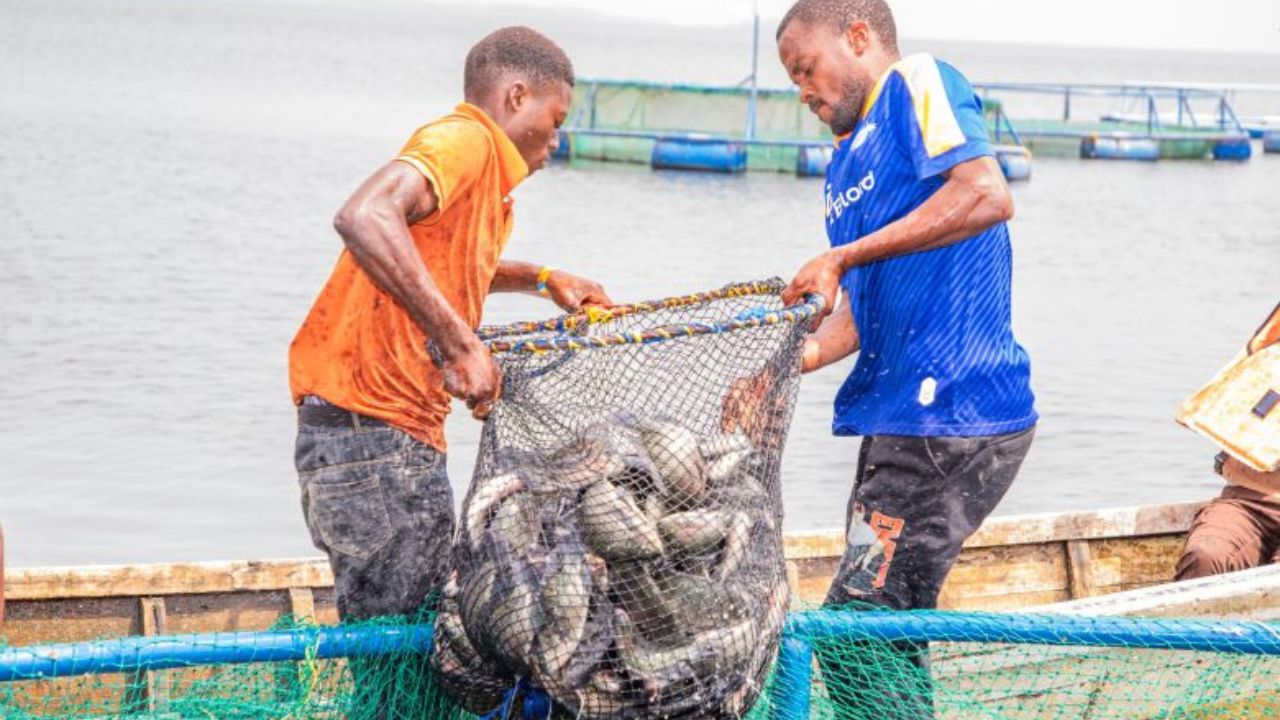

Tanzania is undergoing a profound structural shift in its aquatic economy, transitioning from micro-scale subsistence toward a high-value industrial model. By leveraging its vast freshwater assets, the nation aims to bridge a critical animal protein deficit while positioning itself as an authoritative anchor in the regional Blue Economy.
The United Republic of Tanzania possesses fundamental topographical and hydrological advantages through its partial control of three African Great Lakes: Lake Victoria, Lake Tanganyika, and Lake Nyasa. Despite abundant freshwater resources, the national fisheries and aquaculture sector historically stalled in a micro-scale subsistence phase. Aquaculture contributes only a marginal 8.5 percent to the 510,000.0-ton combined national fish production.
However, empirical data indicates an aggressive structural transition. The sector is moving toward commercial industrialization, marked by terrestrial pond infrastructure expanding from 14,000.0 to over 26,000.0 units. In 2024/2025, total aquaculture production reached 138,607.0 metric tons, dominated by 43,590.0 tons of finfish and 94,977.0 tons of seaweed.
This acceleration responds to stagnating wild catches and a population surge causing animal protein deficits. The 2021-2026 National Development Plan targets a per capita fish consumption of 10.5 kilograms (23.15 pounds), requiring 731,850.0 metric tons annually. This strategic transition is further manifested by Tanzania hosting the World Aquaculture Tanzania 2026 (WA26T) conference, intended to integrate value chains and attract foreign direct investment for the Blue Economy.

A fisherman throws a rope from his boat at the shore of Lake Tanganyika in Kigoma, Tanzania:FAO/Luis Tato
Ecological complexity and the floating cage culture (FNC) revolution
In open-water ecosystems, expansion via conventional earthen ponds lacks spatial and water management efficiency. Floating Cage Culture (FNC) has emerged as the most rational commercial production system for Tanzania's lakes. Lake Victoria is experiencing an exponential FNC revolution, expanding from 100.0 units in 2016 to nearly 1,000.0 units by 2023.
Operationally, FNC facilitates continuous water circulation, supplying dissolved oxygen for high-density populations of 70.0 to 130.0 fish per cubic meter. However, FNC environmental management is highly complex. Accumulating organic matter from waste feed and excretion risks creating anoxic sediment conditions and triggering eutrophication, which can drastically reduce survival rates.
To mitigate ecological risks and spatial conflicts, the Tanzania Fisheries Research Institute (TAFIRI) enforces strict zoning. TAFIRI has mapped 99.0 feasible sites covering 220.0 square kilometers (84.94 square miles) in Lake Victoria. To enhance management accuracy, TAFIRI and the Japan International Cooperation Agency (JICA) are implementing environmental DNA (eDNA) technology via the SATREPS program for real-time biodiversity monitoring.
Genetic crisis and local feed independence
Modernizing FNC remains hampered by two fundamental upstream bottlenecks: degraded genetic seed quality and high commercial feed costs.
Genetic quality crisis (hatchery)
Domestic hatcheries currently cannot meet the demand for quality seeds. Most facilities produce mixed seeds with asymmetric growth rates due to genetic introgression namely, unplanned hybridization between Oreochromis niloticus and wild strains or O. leucostictus.
This crisis is being addressed through private-sector breeding biotechnology, such as the application of YY-Technology in Kigamboni, which produces Natural Male Tilapia (NMT) populations that are 99.0 percent male without synthetic hormones. These pure male seeds are critical for commercial FNC because they prevent wild reproduction, convert feed energy entirely into meat, and achieve 90.0 to 95.0 percent survival with harvest cycles that are 15.0 to 30.0 percent faster.
Agroindustry-based feed independence
Feed costs dominate FNC operational expenditures, forcing reliance on expensive commercial imports. The most empirical solution is decentralizing supply through local feed mills using extruder machines with a capacity of 100.0 to 150.0 kilograms per hour (220.46 to 330.69 pounds per hour) to produce floating pellets.
Optimizing formulations must utilize domestic agro-industrial by-products to economically lower the feed conversion ratio (FCR). Formulations integrate local fish meal (Rastrineobola argentea) to supply essential amino acids, supplemented by low-cost, highly digestible plant proteins like sunflower seed cake and cottonseed cake. Abundant maize bran serves as a primary carbohydrate source, while sugarcane bagasse acts as a nutrient source and natural binder to maintain water stability, ensuring pellets do not pollute the lake.
The following table presents the availability profile of major local raw materials commonly accessed by Tanzanian farmers:

Economic diversification: downstream processing and aquatourism
Fisheries investments must extend beyond freshwater. Diversifying the value chain via marine commodity downstream processing and ecotourism is strategically necessary.
In the Zanzibar Archipelago (Unguja and Pemba), seaweed (Eucheuma cottonii and E. spinosum) constitutes 90.0 percent of regional marine exports. Historically exported raw at approximately 2.0 United States Dollars (USD) per kilogram (2.2 pounds), Zanzibar is leveraging a 65.0 million USD Joint SDG Fund grant and private partnerships to build domestic processing plants. Extracting high-value carrageenan and agar is projected to boost product valuations up to 300.0 USD per kilogram (2.2 pounds) and increase incomes for 15,000.0 predominantly female-led farming households.

Seaweed farming (Eucheuma sp.), Jambiani, Zanzibar, Tanzania: Leyo / Wikimedia Commons / CC BY-SA 2.5 CH
Integrated marine tourism offers dual revenue streams. Combining underwater ecotourism with commercial sea cucumber cultivation in the Pemba Channel Conservation Area funds conservation operations and impact loans via harvests and tourist fees, while simultaneously supplying maritime hospitality employment for fishing communities.
Policy synergy and nucleus-plasma business schemes
Government initiatives, including distributing 507.0 FNC units via loans to 1,897.0 youth and community members in Lake Victoria, require robust business foundations. Capital access and spatial zoning depend on a Nucleus-Plasma (Inti-Plasma) corporate architecture.
The Nucleus commands technology and supply chains. It invests in certified hatcheries for pure male seeds and operates distributed extruder feed mills for Plasma partners (local farmers) without middleman price escalation. As an offtaker, the Nucleus guarantees 100.0 percent harvest absorption at stable contract prices, eliminating market fluctuation risks. Conversely, the Plasma community focuses exclusively on grow-out management and utility maintenance within zoned areas.
This model ensures standardized volumetric output, enabling downstream industrial-scale fillet processing facilities oriented toward the East African market.
The escalation of Tanzanian aquaculture from a subsistence scale toward high-value industrialization demands a holistic production overhaul. Floating Cage Culture expansion must be balanced with strict ecological management through research-based zoning. Industrial sovereignty requires upstream supply chain independence via certified genetics and domestic agro-industrial feed processing, alongside downstream expansion into seaweed processing and aquatourism. These expansions can only be realized sustainably through mutually beneficial Nucleus-Plasma partnerships that protect coastal communities' social resilience.