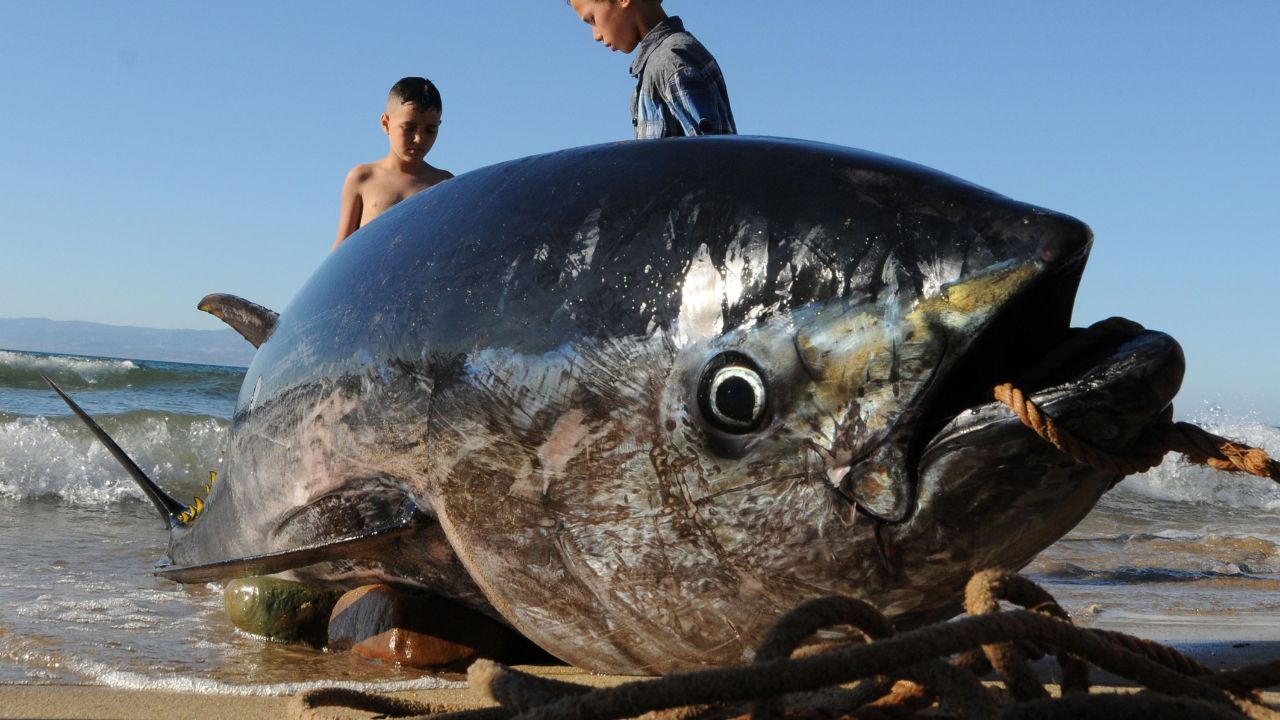

The Moroccan coastline stretches 3,500 kilometers (2,174.8 miles), forming a maritime front that faces the Mediterranean Sea to the north and the Atlantic Ocean to the west. This geographical position places Morocco at the meeting point of two distinct oceanographic systems, making it one of the most structured marine resource zones on the African continent. On the western coast, Moroccan waters are heavily influenced by the Canary Current, a wind-driven surface current that is part of the North Atlantic Gyre. This current system flows south from the African coast toward Senegal, triggering a physical phenomenon known as upwelling. Through this process, cold, nutrient-rich water from the seabed is constantly pushed to the surface, creating high levels of primary productivity (phytoplankton) that support massive scales of pelagic life.
Human interaction with this maritime wealth can be traced back to ancient eras, long before modern states were formed. The Moroccan coastal region has long functioned as an essential maritime trade hub at the crossroads of civilizations. In Essaouira, a port city formerly known as Mogador, Phoenician and Carthaginian sailors established maritime trading posts as early as the fifth century BC under the leadership of the navigator Hanno. The primary attraction of the area at that time was not fish, but the production of high-value textile dyes. By the first century AD, under the direction of King Juba II of Mauretania, Mogador developed into a center for purple dye extraction. This pigment, known as Tyrian purple, was produced from the mucous glands of sea snails of the species Murex trunculus and Murex brandaris, whose natural populations were abundant in the intertidal waters around the Purpuraires Islands (Iles Purpuraires) in the Bay of Essaouira. This coastal dye industry, whose ashes frequently adorned the garments of Roman senators, became the early foundation for Morocco’s economic integration into ancient maritime networks.
Moving across the centuries toward the modern industrial era, the focus of Morocco's maritime exploitation shifted from textile dye extraction to food security and the production of capture fishery commodities. By the mid-twentieth century, Morocco established itself as the world's leading producer and exporter of sardines (Sardina pilchardus). These small pelagic species dominate national catch volumes, forming the backbone of a fish canning industry centered in port cities such as Agadir, Safi, and Essaouira. Port infrastructure in this central Atlantic region of Morocco is designed to process tens of thousands of metric tons of fish annually. Packaging plants in the region use vegetable oil, tomato sauce, or brine to preserve pelagic fish before they are shipped to domestic markets, the European Union, and regions across Asia and Africa.

General view of the port area in Agadir, Morocco: FAO/Alessandra Benedetti | Editorial use only (Modified)
Despite this long history, the dynamics of modern capture fisheries face real ecological challenges. Decades of exploitation pressure and changes in sea surface temperatures due to climate fluctuations have begun to affect the abundance and distribution of pelagic fish stocks. Reports from fisheries research institutions note a shift in sardine populations toward southern waters, moving away from traditional processing centers in Agadir and Essaouira toward ports in Laayoune and Dakhla. In the early 2020s, these southern ports contributed to the vast majority of Morocco’s coastal and artisanal catches. The decline in commercial catch volumes in several northern and central ports has, in turn, forced Moroccan industry and policymakers to rethink their maritime governance designs. The reality of the natural limits of capture fisheries serves as a basis for Morocco to formulate a more measured approach to managing and distributing its seafood resources.
Fish tagine and Maghreb coastal gastronomy
The yields from Morocco’s Atlantic and Mediterranean waters do not only end up in export commodity cans. This maritime supply has historically permeated local cultural and gastronomic structures. The evolution of national fisheries has progressed alongside the development of culinary traditions that make seafood a balancing element for the diets of coastal communities. The strength of Moroccan gastronomy rests on its ability to blend fresh sea catches with the agricultural wealth of the land, creating flavor profiles that are layered, spiced, and highly specific to their geography.
The heart of this flavor fusion lies in the use of chermoula, a traditional marinade historically developed to prepare fish and other seafood before cooking. The basic composition of chermoula relies on local aromatic ingredients: fresh coriander, parsley, garlic, lemon juice, and olive oil, which are then bound by a blend of spices that provide warmth. The use of spices in Moroccan seafood directly maps the country’s economic geography. Saffron is brought from the Taliouine mountain region, famous for producing high-quality spices, while cumin and turmeric provide a prominent earthy flavor character. Meanwhile, preserved lemon whole lemons preserved with sea salt and their own juice provides a level of acidity capable of balancing the natural fat richness of pelagic species like sardines or mackerel.
The presentation form that most represents this maritime and agricultural synthesis is the seafood Tagine. Slow-cooked in a traditional cone-shaped clay vessel, this method distributes heat and maintains constant moisture, ensuring the fish cooks evenly alongside seasonal vegetables, olives, and layers of chermoula. Unlike meat or poultry Tagine dishes, which often integrate sweet elements from dried fruits like plums, apricots, or dates, fish Tagine is generally prepared with a flavor profile that is entirely savory, acidic, and herbaceous. Beyond complex dishes, ports such as Essaouira or Agadir also maintain a more functional yet essential consumption culture: fresh daily-caught sardines grilled directly over open charcoal grills, enjoyed around the markets (souks) with flatbread and characteristic Moroccan mint tea.

The preparation of a traditional Tajine dish at a local restaurant in Agadir, Morocco: FAO | Editorial use only (Modified)
In the past, the consumption of fresh seafood like this was highly limited to a radius of a few kilometers from the coastline due to limitations in preservation technology. However, along with the modernization of logistics networks, the geographical boundaries of fishery product distribution have begun to be overcome. The construction of mass transportation infrastructure, such as the highway network connecting the coastal hub of Agadir with inland cities like Marrakech, accompanied by the standardization of cold chain fleets, allows fresh seafood to reach inland markets and the Atlas Mountains region with preserved quality. This logistical ease has gradually changed the protein consumption habits of inland communities, reducing dependence on red meat products in favor of marine-based nutritional diversification. The spread of coastal gastronomic culture throughout the country has also increased domestic demand and created new economic variables that demand the sustainable availability of seafood supplies, which in turn has encouraged the acceleration of the modern cultivation sector.
Plan Halieutis, shifting course toward aquaculture
High and widespread domestic demand, combined with Morocco's position as a reliable supplier in the global fisheries market, culminated in an administrative conclusion at the government level: the volume of open-sea exploitation must be immediately balanced with controlled cultivation methods. Awareness of the ecological carrying capacity limits regarding the vulnerability of pelagic and demersal fish stocks prompted the Moroccan government to restructure its maritime management. Responding to these challenges, in 2009, a national blueprint called Plan Halieutis was officially launched by the authorities. This policy framework was drafted with strategic objectives to secure maritime sustainability, increase the economic value of fishery products, reduce excessive pressure on capture fisheries, and project a gradual increase in export value.
One of the most essential operational transformations of Plan Halieutis is the serious initiation toward the marine aquaculture sector. To ensure that this pillar is realized with an organized regulatory framework, the government established an independent agency in 2011, the National Agency for the Development of Aquaculture (Agence Nationale pour le Développement de l'Aquaculture / ANDA). ANDA received a regulatory mandate to formulate maritime spatial planning, assist in the licensing process, and facilitate direct investment from the private sector and international partners. Unlike the fishery paradigms of the past, which were oriented toward high-volume but low-value commodities, Morocco’s aquaculture plan is designed with a focus on high-value species. Species such as oysters, mussels, marine fish, and shrimp were chosen because they have a strong demand structure in domestic and premium global markets, allowing for the achievement of viable economic margins without massively burdening marine areas.
The implementation of this policy has regularly begun to produce empirical results. By reports from the middle of the decade, administrative data from ANDA noted that Morocco has accommodated at least 244 active aquaculture projects currently in the implementation stage. These projects are directed toward meeting an initial annual production capacity target of approximately 90,000 metric tons, where in the long term, the government estimates an increase in maritime output that could exceed 124,000 metric tons and reach a target of 300,000 metric tons. This scaling up is also estimated to open tens of thousands of new jobs for coastal communities. To support this production rate, investment has also been allocated for supporting infrastructure, including the construction of hatcheries to reduce dependence on imported seeds, cold chain storage facilities, and export-standard processing.
Financial support and structural assistance also come from multilateral entities. The World Bank and other donor agencies contribute technical support for ANDA to ensure that the aquaculture zoning process aligns with environmental precautionary standards. Site selection for cultivation is regulated based on strict maritime parameters, accounting for ocean currents, the stability of the seabed ecosystem's carrying capacity, and disease mitigation strategies. Through this concurrently designed bureaucratic and ecological framework, Plan Halieutis operates not merely as a statement of political vision, but as a regulatory engine that is gradually modernizing the way Morocco produces marine protein.
The Dakhla aquaculture phenomenon
The transition from pure capture to planned cultivation finds its most tangible application space in southern Morocco, specifically in the Dakhla region. Geographically, Dakhla presents an unusual landscape configuration where the arid stretches of the Sahara Desert intersect directly with the open waters of the Atlantic Ocean. Its peninsular land configuration forms Dakhla Bay, a semi-enclosed body of water capable of dampening the turbulence of large Atlantic waves while still maintaining hydrological interaction with the Canary Current upwelling system. The hydro-oceanographic conditions in Dakhla produce water mass movements that periodically renew nutrients at the sea surface, making this area a grow-out zone considered highly ideal for bivalve and seaweed cultivation.
The bay's waters, historically quiet from heavy industrial activity, are now being repurposed into productive aquaculture centers. The commodity that most dominates the Dakhla waters is the Pacific Oyster (Crassostrea gigas). Cultivators apply the rack-and-bag cultivation method iron rack structures supporting mesh bags placed in the intertidal zone. This method allows oysters to absorb plankton nutrients during high tide and be exposed to air and sunlight during low tide, a natural cycle known to be effective for hardening oyster shells and killing parasites attached to the nets. In addition to oysters, the Dakhla region also integrates macroalgae production. Local maritime companies, such as SETEXAM, focus on cultivating red seaweed of the Gracilaria gracilis species, which is extracted for agar industry and biotechnology needs. Furthermore, crustacean cultivation initiatives, such as those operated by VitaminSea Morocco, which produces shrimp with measured systems, are beginning to be projected to meet domestic market needs and enter regional export stages.
The scale of expansion in Dakhla and its surrounding areas plays a functional role in regional economic restructuring. ANDA reports that hundreds of cultivation concessions have been approved in Morocco’s southern bays, slowly changing the face of the arid region into a blue economy hub. This labor-intensive sector attracts infrastructure investment and generates specific employment absorption, including professions such as pond technicians, aquatic biosecurity staff, and cargo container temperature control specialists.
Nonetheless, the growth of this tonnage capacity is guarded by environmental procedures. Because Dakhla Bay is a natural nutrient catchment area vulnerable to changes in organic loading, the fisheries administration mandates systematic aquatic waste management protocols. Marine biota health checks, periodic water quality analyses, and calculations of the cultivation area’s carrying capacity have become mandatory for industrial actors to maintain production licenses. The development of Dakhla thus functions as a natural laboratory, proving that zones previously marginalized from conventional agricultural paths, through the application of oceanographic science, can be manifested as maritime food granaries.
Global insight exchange at the continental crossroads
The growth of fishery infrastructure and the feasibility of Morocco’s aquaculture regulations have naturally widened the country’s international diplomatic space. Strategically positioned at the shipping link between Europe, the West African coast, and the Arab world, Morocco uses its maritime profile to facilitate cooperation based on knowledge transfer and institutional improvement. Established partnerships include the involvement of supranational bodies such as the UN Food and Agriculture Organization (FAO), the Japan International Cooperation Agency (JICA), and development funding agencies that continue to support improvements in stock management methodologies and spatial sustainability.
In the framework of maritime diplomacy, South-South cooperation initiatives also receive a measured portion of attention. Morocco opens technical discussion forums with maritime countries across climate zones, including representatives from tropical archipelagic regions like Indonesia. Bilateral relations in the realm of the blue economy are based on balanced needs. Given that every country faces climate fluctuation pressures and increased production costs, discussions among experts often highlight cost-effective aquaculture solutions that can be applied by both the commercial private sector and artisanal coastal communities.
One potential means of interaction from these transnational relationships is reflected through the idea of Aquatourism, a hybrid activity approach that weaves observation tourism with technical benchmarking. In its application, Aquatourism is not reduced to a mere recreational tourism program, but is designed as academic tours and industrial visits between delegations. Through such programs, business representatives, university researchers, and coastal management authorities from international partners can visit operational sites in Morocco, such as oyster grow-out units in Dakhla or modern seed hatcheries. These visits are intended to dissect biosecurity management strategies, upstream-downstream operational efficiency, and patterns of sociological integration of local communities into the industry.

The busy atmosphere of women workers canning fish in a sardine factory in Agadir, Morocco: FAO/Giuseppe Bizzarri | Editorial use only (Modified)
Blue balance in North Africa
The journey of Morocco's maritime sector reflects the mature adaptation of a state entity to the demands of time and ecology. The evolution spanning from the traces of purple dye extraction from Murex shells by the Phoenicians in the waters of Mogador centuries ago, the dominance of sardine fishing fleets in supplying the modern canning industry, to the emergence of a spice-based culinary culture connecting boat people with the Atlas hills, are all historical fragments that strengthen Morocco's coastal identity. However, that past identity is now being calibrated with more rational ecological calculations.
The government's planned decision through the implementation of Plan Halieutis to reset the rhythm of open-water exploitation and parallelly establish a marine aquaculture ecosystem proves a structural commitment to maintaining biological stock resilience. The ability to transform the Dakhla coast where the arid Sahara climate meets cold Atlantic waters into a production center for bivalves and algae demonstrates that a balance between environmental protection and commercial productivity is pragmatically achievable. Through spatial regulation maturity, readiness to accommodate investment, and openness in organizing expert exchanges at the continental level, Morocco treads a path of maritime innovation with technical certainty.
The synergy built between the maintenance of unique maritime gastronomic traditions, the supervision of the legendary capture fishery industry, and the expansion of modern cultivation, lays a resilient economic foundation. Morocco not only demonstrates methods to secure marine protein supplies for its future, but also sets measured management standards as a model for stable blue economic resilience in the Africa and Middle East regions. The weave of policy caution, logistical intelligence, and aquatic science ensures that the potential of the Atlantic Ocean and the Mediterranean Sea will continue to circulate, maintaining the stability of the Maghreb for decades to come.