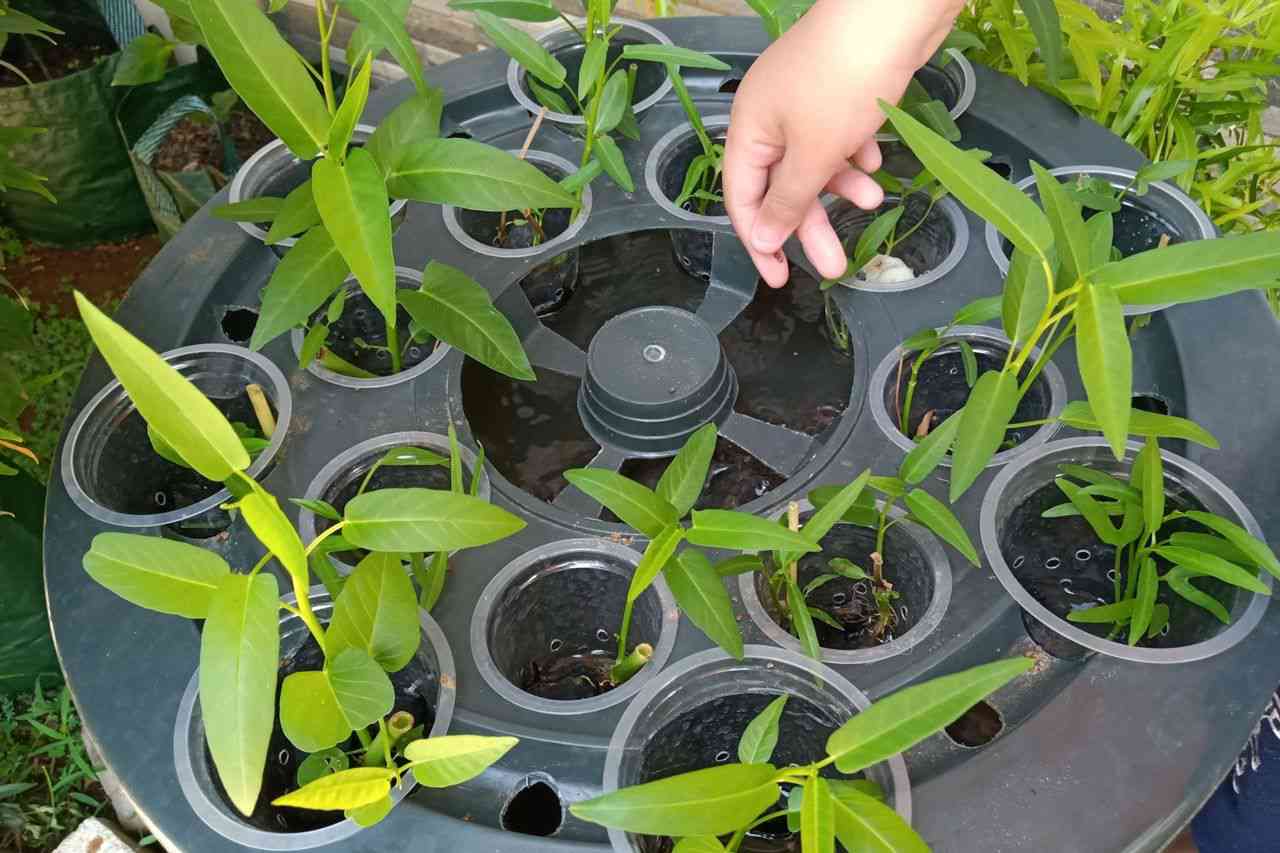

Cultivation in buckets or as it is better knownBudikdamber, has become increasingly popular among the public because it provides an attractive and practical alternative in meeting food needs. Apart from being a fun hobby,Budikdamber has also been proven to generate significant profits for the perpetrators. By utilizing a small space behind the house, such as a yard or yard, you can easily produce a source of nutritious food without having to spend a lot of money on building a large pond or large agricultural land. This concept provides an innovative solution for those who want to be independent in producing daily food economically and environmentally friendly.
Budikdamber itself not only provides benefits in terms of providing food sources, but also has a positive impact in terms of food independence and the family's economy. By practicingBudikdamber, people can reduce dependence on conventional food markets, thereby reducing spending on buying fresh fish. Apart from that, cultivating in buckets can also be a source of additional income for families, either through selling farmed fish or by-products such as vegetables produced through an integrated aquaponics system.
By utilizing existing technology and knowledge,Budikdamber can be used as a solution to overcome food problems and increase food security at the household level. By cultivating in buckets, the community can have full control over the quality and safety of the food produced, and can ensure sufficient food supply for the family's needs. This is also in line with the spirit of building a sustainable life that is more independent and environmentally friendly.
In the context of sustainability,Budikdamber also has the potential to reduce the carbon footprint and other environmental impacts resulting from conventional food production. By utilizing limited space and simple technology,Budikdamber reduces the need for large areas of land and uses natural resources more efficiently. Additionally, integration with an aquaponics system also allows for more efficient use of water and produces less organic waste, which in turn can reduce negative impacts on the environment.
Here are some ways and preparations to do itBudikdamber:
Preparation and materials required
To start cultivation in a bucket, prepare the following materials:
1. 200 liter bucket, or can be replaced with a suitable plastic container.
2. Aerator for water oxygenation together with a hose and aerator stone.
3. 50 fish seeds of uniform size, around 4-5 cm.
4. Electric socket located close to the bucket and protected from direct rain.
5. Fish seed feed.
6. Aquarium water pump to suck water into the bucket.
7. Aquarium hose (3-5 meters).
8. Small bucket with lid.
9. Sack of garlic.
10. Coarse layer fiber and fine layer fiber.
11. Charcoal.
12. Zeolite stone.
13. Bible.
Making filters for ponds
The next step in cultivating in a bucket is to prepare a filter that will be used to keep the pond water quality clean and support healthy fish growth. This filter plays an important role in maintaining the pond ecosystem by filtering dirt and harmful substances from the water.
To make a filter, the materials needed are arranged sequentially in a small bucket. First, garlic sacks are placed as the first layer to contain coarse dirt. Next, the coarse layer fiber and fine layer fiber are installed as a clarifier layer which will filter fine particles from the water. Wood charcoal is placed as the next layer to absorb chemicals that may be present in the water. The zeolite stone is then installed as an ammonia and nitrate absorber, while the bioball functions as a medium for the growth of good bacteria which helps in the water purification process.
Apart from preparing the filter materials, it is also important to make a water inlet hole at the top of the filter bucket and a drain hole at the bottom. The water inlet hole will allow dirty water from the pool to enter the filter to be filtered, while the drain hole will make it easier to clean and maintain the filter. Thus, this filter will help maintain the water quality of the fish pond in the bucket so that it remains optimal for fish growth and health.
Prepare the bucket
Placing buckets or containers for fish farming can be done in two positions, namely standing or lying down, depending on preferences and the conditions of the space available. Standing pools are often chosen because they can save lining space and reduce the risk of possible leaks. However, standing ponds require additional aerators to provide additional oxygen to the fish due to the limited water surface in this position.
On the other hand, lying ponds provide flexibility for fish to get oxygen from the air because of the larger water surface area. This makes the lying pond more friendly to the fish's oxygen needs without relying too much on additional aerators. However, recumbent pools may require more horizontal space and may require special treatment in the face of the risk of leaks if not designed properly. Thus, choosing the position of the fish pond, whether standing or lying down, must be considered carefully according to existing needs and conditions.
For drum-shaped pools, they can be made in a standing or lying position. However, for buckets, they must be placed in a standing position. Before use, the water in the pool must be prepared first, and it is recommended to use rainwater, AC water, well water or clean river water. Using PAM water also requires soaking overnight so that the chemical content settles before use.
You must also pay attention to the installation of the filter bucket, by placing it in a place higher than the pool to avoid the presence of mosquito nests. A water pump is inserted into the pool to suck up dirty water and channel it into the filter via a water hose. The water outlet hose should not be too long and the water that comes out should be like a shower to bring additional oxygen. Next, the aerator is turned on and the aerator hose is inserted into the pool, even better if you use a water pump that is arranged into a venturi to provide additional oxygen. Thus, these steps are an important part of preparing a pond for bucket cultivation.

ExampleBudikdamber in a standing position
Keeping fish in a bucket
After the pond and filter are ready, the next important stage in cultivating in buckets is inserting fish seeds into the pond. This process requires special attention to reduce the stress that the fish may experience during the adjustment process. One commonly used technique is the acclimatization method, where the fish are placed with water in a plastic bag for a while before being released into the pond. This aims to give the fish time to adapt to the new environment and reduce potential stress due to sudden changes in temperature or water conditions. This acclimatization process also allows the fish to slowly get to know the new pond environment before being slowly released.
This acclimatization technique is very important for the welfare of fish in the pond. By giving the fish time to slowly adjust to the new environment, we can reduce the risk of stress which can disrupt the fish's growth and health in the long term. In addition, this process also helps minimize potential health problems that can arise due to excessive stress on the fish, thereby ensuring success in bucket farming.
Feeding and water changes
Feeding fish in buckets can be done by giving pellets regularly, especially in the morning and evening. Scheduled feeding helps maintain the health and growth of fish, and ensures that they get enough nutrition for their metabolic needs. Apart from that, regular feeding also helps in optimizing the production and quality of the fish meat produced.
Apart from providing regular feed, it is also important to change the water regularly even though a filter has been installed in the pond. Although filters help maintain water quality by filtering dirt and harmful substances, regular water changes are still necessary to maintain optimal pool conditions. Cloudy water can reduce the quality of life of fish and increase the risk of disease, therefore regular water changes help maintain pond cleanliness and overall fish health.
Prevent disease in fish
One of the main keys in preventing disease in deep fishBudikdamber is to maintain the cleanliness of the pool and the surrounding environment. By keeping the pond clean and free from dirt and uneaten food, we can reduce the risk of breeding bacteria and parasites that are harmful to fish health. Apart from that, maintaining the environment around the pool is also important, such as ensuring that there is no standing water around the pool which can become a breeding ground for mosquitoes or other pests that can carry disease.
If symptoms of disease occur in one of the fish, an important step that must be taken immediately is to separate the fish from the main pond and place it in salt water for further treatment. Salt water has antibacterial and anti-parasitic properties which can help in treating several types of diseases in fish. Apart from that, it is also necessary to observe symptoms of disease in other fish and take the necessary preventive steps, such as improving pond cleanliness and providing quality feed.
Optimizing cultivation results with aquaponics

Aquaponics on the poolBudikdamber
Apart from being a source of income and quality food, the concept of Budikdamber combines fish farming with an aquaponics system that provides double benefits in food production. With this system, organic waste produced by fish becomes nutrition for plants grown in the aquaponics system. This process not only cleans the water from organic waste, but also provides a natural source of nutrition for plants, so that plants can grow well without the need for additional chemical fertilizers. As a result,Budikdamber not only produces quality fish, but can also produce green vegetables at the same time, creating a more sustainable and environmentally friendly agricultural system.
DraftBudikdamber shows great potential as an innovative and sustainable solution in meeting the food and economic needs of local communities. By utilizing the limited space behind the house, individuals or families can produce high-quality food independently, without relying on outside food supplies. In addition, by integrating fish cultivation with an aquaponic system,Budikdamber is also an attractive alternative in building a more sustainable and environmentally friendly agricultural system. Seeing this,Budikdamber has great potential to become an efficient and sustainable model of urban agriculture, and it is not impossible that it will be able to make many positive contributions to food independence and the local economy.