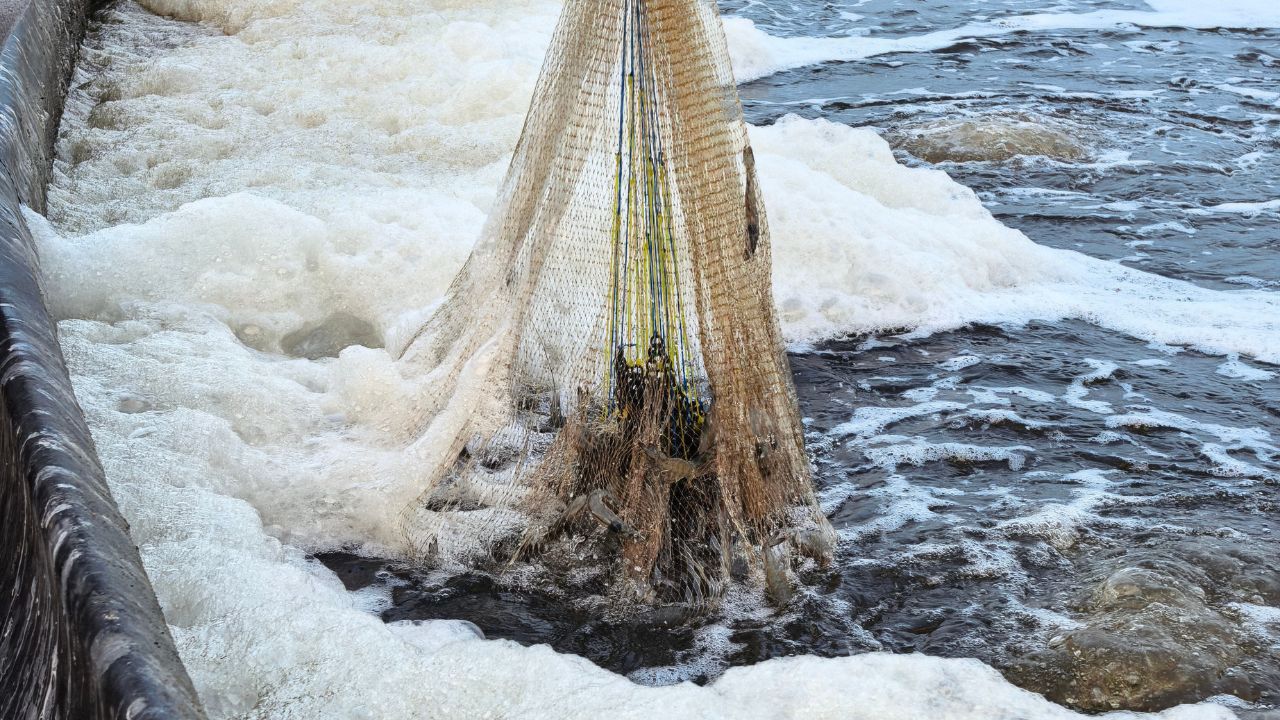

Vannamei shrimp (Litopenaeus vannamei) is a premier aquaculture commodity known for its environmental tolerance, surviving salinities from 0.5 ppt to 40 ppt. However, this euryhaline resilience does not guarantee optimal growth, and overlooked extreme salinity fluctuations can destructively impact production in commercial, intensive cultivation.
Physiological mechanism: osmoregulatory burden
To understand this impact, one must examine osmoregulation, the mechanism by which shrimp balance internal osmotic pressure with their environment. At optimal salinities (15-25 ppt), shrimp exist nearly isosmotic, requiring minimal energy for regulation. Conversely, sudden hyposmotic drops after heavy rain or hyperosmotic spikes driven by dry-season evaporation force shrimp to expend significantly more energy. Consequently, feed energy intended for muscle growth is heavily hijacked and diverted to fuel baseline osmoregulation and survival.
Direct impact on cultivation performance
Salinity fluctuations exceeding 5 ppt within a short 24-hour window trigger a severe domino effect on pond operations. First, average daily growth plummets, inflating the feed conversion ratio as energy is diverted to osmoregulation instead of biomass generation. Second, rapid shifts severely disrupt the molting phase. Salinity dictates the availability of Calcium (Ca) and Magnesium (Mg) minerals essential for forming carapaces often causing premature mass molting. Without sufficient water alkalinity and minerals, shrimp face soft shells, failed molting, or subsequent death. Finally, environmental stress suppresses the immune system, leaving shrimp highly vulnerable to opportunistic infections. Altered plankton and bacteria dominance frequently sparks population explosions of harmful pathogens like Vibrio sp. or accelerates White Spot Syndrome Virus (WSSV) outbreaks.

Shrimp dead due to high salinity: Banglele Indonesia
Management strategies in the field
While weather is uncontrollable, its operational impacts must be aggressively managed. Operators should monitor salinity at least twice daily using a refractometer, logging data for informed decisions during weather transitions. Because heavy rain causes sudden drops and creates freshwater stratification on the surface, technicians must immediately drain surface water via overflows and run aerators at maximum capacity to mix the layers. During prolonged dry seasons, slow, measured freshwater addition prevents salinity from exceeding growth tolerance limits. To bolster resilience before extreme weather events, operators should coat feed with Vitamin C, immunostimulants, and essential minerals, followed by mandatory liming using dolomite or agricultural lime post-rain to stabilize pH and alkalinity. Controlling salinity ultimately secures survival rates and harvest tonnage targets in a stable environment.
What is the impact of using 100 percent borewell water?
During long dry seasons, borewell water (groundwater) which is typically fresh at 0 ppt or possesses very low salinity prevents salinity from spiking to extreme levels (such as 40 ppt) as it safely replaces evaporated water. However, relying exclusively on 100 percent borewell water as the primary source introduces technical challenges demanding rigorous water quality management.
1. Mineral deficits and imbalances
Shrimp heavily depend on specific ionic profiles, but borewell water inherently lacks the macro minerals—Magnesium (Mg), Calcium (Ca), and Potassium (K)—that are naturally abundant in seawater. This critical deficiency drops alkalinity, disrupting osmoregulation and triggering failed molting, soft shells, or severe muscle cramps. Routine remineralization via agricultural lime applications (dolomite or calcite) or the direct addition of commercial Mg and K to water and feed is completely mandatory.
2. Heavy metal content and toxic gases
Groundwater frequently contains dissolved, toxic Hydrogen Sulfide (H2S) gas, low pH, and dangerous levels of Manganese (Mn) and Iron (Fe). Since high iron severely inhibits respiration by adhering directly to shrimp gills, extracted water must enter a reservoir for strong aeration, allowing metals to fully oxidize, clump, and settle before pond introduction.
3. Absence of natural biota
Groundwater is highly sterile, lacking the phytoplankton seeds and beneficial bacteria required for ecosystem foundations. Operators must implement intensive water coloring treatments using probiotic cultures, fermented bran or molasses, and fertilizers to successfully establish plankton blooms well before stocking post-larvae.
4. Seawater intrusion risks and discharge capacity
Large-scale coastal extraction operations risk triggering permanent seawater intrusion into the local aquifer. Furthermore, intensive pond exchange needs frequently exceed the maximum flow rate capacities of individual wells. Thus, utilizing primary borewell water requires immense budgets for continuous remineralization, robust initial aeration, and adequate sedimentation reservoirs, whereas it remains an excellent backup for simple dilution.
When neighboring farm organic waste degrades surrounding coastal water—marked by high ammonia, nitrite, and total organic matter—borewell water functions as a critical operational lifesaver. Shifting to primary borewell usage under heavily polluted conditions provides crucial technical advantages.
1. Maximum biosecurity level (disrupting disease transmission)
Waste from nearby ponds acts as a major horizontal transmission route for deadly pathogens, including Vibrio parahaemolyticus (the primary cause of AHPND/EMS), Enterocytozoon hepatopenaei (EHP) spores, and WSSV. Deep aquifer borewell water is naturally free from aquatic pathogens, offering a maximized biosecurity safety net that effectively isolates the facility from regional disease outbreaks.
2. Highly stable and measurable water quality parameters
Unlike highly unpredictable polluted surface water, raw borewell water—despite requiring initial treatment for heavy metals and mineral deficiencies—provides perfectly consistent and easily measurable baseline water parameters at all times.
3. Synergy with zero water exchange systems
Given restricted flow rates and continuous remineralization costs, borewell water pairs ideally with intensive, minimal-exchange technologies like Biofloc or Recirculating Aquaculture Systems (RAS). These advanced systems seamlessly maintain internal water quality via rigorous mechanical and biological filtration, severely reducing total external water dependency.

Acclimatization process of shrimp post-larvae to be stocked: Banglele Indonesia
Operating exclusively with borewell water amid severe marine pollution requires two final adjustments. First, hatcheries normally supplying post-larvae at 28-32 ppt must slowly acclimatize them to low-salinity conditions before pond stocking to prevent massive osmotic mortality. Second, extracted water must remain in an actively aerated reservoir for 3-5 days to completely strip toxic underground gases and thoroughly oxidize all lingering Iron (Fe) before ever reaching the cultivation plots.