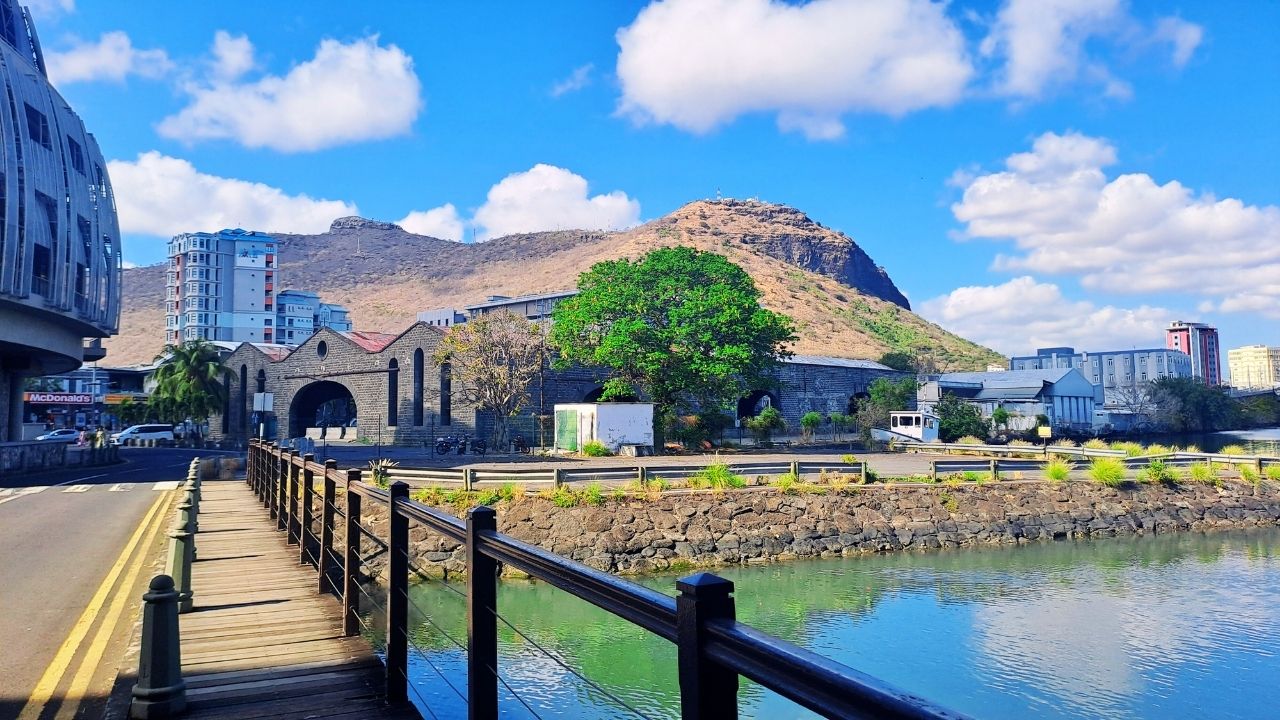

Mauritius, a small island nation situated in the Indian Ocean, holds a strategic position that makes it a focal point in the development of the Blue Economy. According to data from the Blue Economy, Mauritius manages an Exclusive Economic Zone (EEZ) spanning 2.3 million square kilometers, including the Chagos Archipelago, as well as a continental shelf of 396,000 square kilometers jointly managed with the Republic of Seychelles. These vast marine territories offer significant opportunities for exploring ocean resources, including wild fisheries and aquaculture.
Currently, the Blue Economy contributes around 10% of Mauritius's Gross Domestic Product (GDP), reflecting the nation's commitment to integrating marine potential into its national economy. The Mauritian government has set an ambitious goal to double this contribution to 20% in the coming years. This vision aligns with the country's aspirations to become a sustainable marine economy hub, encompassing diverse sectors such as wild fisheries, coastal tourism, and inland aquaculture.
Among these sectors, inland aquaculture holds particular promise, especially in enhancing food security and driving economic diversification. However, despite its potential, the development of inland aquaculture in Mauritius faces several challenges. Key issues include limited land availability and freshwater resources required for efficient aquaculture management. Additionally, existing policies need to be strengthened to promote sustainable and environmentally friendly practices in this sector.
Amid global efforts to encourage sustainable management of marine and terrestrial resources, Mauritius stands at a pivotal moment. It has the opportunity to become a model for other island nations by integrating both marine and inland aquaculture into its Blue Economy strategy. These forms of aquaculture not only offer economic benefits but also present innovative solutions to food security challenges, particularly in advancing the concept of blue foods.
Fisheries in Mauritius
According to the Food and Agriculture Organization (FAO) data from 2021, fish consumption in Mauritius reached 28.83 kilograms per capita, making it the second-highest per capita fish consumer in Africa, following Seychelles. Despite this distinction, fish consumption in Mauritius has remained relatively stagnant in recent years. A significant portion approximately 77% of this consumption is dominated by marine fish, reflecting the Mauritian population's strong preference for seafood. In contrast, freshwater fish account for only about 6% of the total fish consumption.
Fish and seafood consumption per capita, 2021
Data is inclusive of all fish species and major seafood commodities, including crustaceans, cephalopods, and other mollusc species.

Insights into fish consumption trends in Africa are drawn from Our World in Data: Food and Agriculture Organization of the United Nations (2023)

Per capita fish consumption data for Mauritius from 2019 to 2022 has been analyzed by the World Population Review, offering a detailed view of the nation's seafood preferences and trends over recent years
Mauritius has demonstrated substantial progress in its fisheries sector, both in production and international trade. The FAO's 2022 report highlights that the country recorded a wild catch production of 33,000 tons, predominantly comprising tuna species. Skipjack tuna accounts for 40% of this catch, followed by yellowfin tuna at 35%. These figures have grown steadily in recent years, supported by the adoption of Fish Aggregating Devices (FADs), which have effectively enhanced fishing efficiency. By 2023, Mauritius’s seafood exports, including shrimp, were valued at approximately USD 463 million, with tuna being the flagship export, contributing 68% of the total value.
Aquaculture in Mauritius, though active for over three decades, only achieved significant production levels starting in 2004. Before then, annual production rarely exceeded 50 tons. However, the introduction of marine cage farming systems brought a significant leap in output, reaching 350 tons in 2004. By 2020, aquaculture production peaked at 3,300 tons, driven almost entirely by floating cage systems. Unfortunately, this momentum faltered, with production declining sharply to 1,500 tons by 2022. This drop underscores the challenges of maintaining sustainable production and highlights the need for innovation and diversification to fully harness the sector's potential.
Mauritius has also established itself as a leading seafood trade hub in the Western Indian Ocean region. With a well-integrated infrastructure, the nation provides essential facilities such as reefer vessel rentals, ample berthing spaces, cold storage, and seafood processing, marketing, and distribution centers. These facilities are strategically located within designated zones to streamline trade and export operations efficiently. In 2021, the Mauritian fishing fleet consisted of approximately 1,640 vessels, although the majority were non-decked boats.
The fisheries sector is also a critical employer in Mauritius, providing jobs for around 27,500 individuals. Women play a notable role within this sector, constituting approximately 4% of the workforce. For example, in aquaculture, about 128 workers are employed, one-third of whom are women. This highlights the potential for aquaculture to serve as an inclusive avenue for employment, fostering opportunities for both men and women alike.
Challenges and opportunities in developing inland aquaculture in Mauritius
The aquaculture sector in Mauritius, particularly inland aquaculture, remains underdeveloped due to several factors. These include limited land availability, strict environmental regulations to protect aquatic ecosystems, and Mauritius’s economic focus on tourism. According to the African Development Bank Group, tourism is a cornerstone of the Mauritian economy, contributing approximately 24% of the country’s GDP, with significant revenue generated from coastal tourism and luxury resorts. Tourism earnings have bolstered Mauritius’s foreign exchange reserves, which reached USD 6.7 billion by the end of 2023.
In contrast, data from the Nairobi Convention indicates that fisheries and aquaculture account for only 1.5% of GDP, with a primary focus on artisanal fisheries and tuna exports. Despite this disparity, inland aquaculture presents untapped potential, provided the systems employed are environmentally sustainable and align with governmental policies.
The Mauritian government exercises caution in developing aquaculture due to concerns over its potential impact on coastal ecosystems, which are vital to the tourism industry. Environmental conservation efforts are reflected in policies such as the Integrated Coastal Zone Management (ICZM) and Marine Spatial Planning (MSP) frameworks, which require all maritime activities, including aquaculture, to adhere to strict environmental regulations. To mitigate ecological risks, strategies such as adopting closed-loop aquaculture systems, including biofloc technology and recirculating aquaculture systems (RAS), could be implemented. These methods are designed to minimize negative environmental impacts while optimizing production efficiency.
Despite these challenges, inland aquaculture holds significant promise for Mauritius. According to data from Knoema, the country has approximately 1,000 hectares of inland water bodies, including rivers, reservoirs, and lakes, distributed across the island. These water resources are of exceptional quality and are safeguarded through comprehensive environmental policies. This offers a strong foundation for developing sustainable inland aquaculture, leveraging Mauritius’s pristine natural conditions while diversifying the economy beyond its reliance on coastal tourism and artisanal fisheries.
Strategies for developing inland aquaculture in Mauritius
The Mauritian preference for marine fish consumption poses a unique challenge in advancing inland aquaculture. However, advancements in environmental engineering technology enable the cultivation of marine fish in inland water systems. Artificial seawater production or the development of fish species with low salinity tolerance offers viable solutions. According to Mr. Barkah Tri Basuki (41) from Banglele Indonesia, during his visit to Mauritius in October, saline tilapia (Oreochromis niloticus), which thrives in low-salinity environments, could provide an alternative aquaculture option. Its flavor closely resembles that of marine fish, making it an appealing choice. Additionally, milkfish (Chanos chanos forskal), known for its adaptability to low salinity, presents another sustainable option for environmentally friendly inland aquaculture.

An innovative aquaculture practice involves the cultivation of saline-tolerant tilapia during fallow periods in brackish water ponds traditionally used for vannamei shrimp farming: BPPP Banyuwangi
Mr. Barkah also highlighted the potential for Mauritius to adopt freshwater shrimp farming techniques, such as the successful cultivation of vannamei shrimp (Litopenaeus vannamei) in Indonesia. Vannamei shrimp are highly adaptable to low salinity, disease-resistant, and ideal for inland aquaculture development. Integrating shrimp farming with low-impact systems, such as biofloc technology or recirculating aquaculture systems (RAS), can minimize waste, optimize water resource utilization, and reduce environmental impact.
Another promising strategy for Mauritius is the introduction of commercially viable freshwater fish species. Pangasius catfish (Pangasius spp.), for instance, is well-suited for fillet production and processed fish products. Given the Mauritian market's familiarity with frozen fish and processed seafood, Pangasius offers significant commercial potential. Controlled and sustainable farming of freshwater fish also carries a lower environmental risk compared to fishing in open waters such as lakes, rivers, and seas.
Gourami (Osphronemus goramy), considered a premium freshwater fish in Indonesia, could be another candidate for commercial aquaculture in Mauritius. As noted by Mr. Barkah, gourami is prized for its savory taste and economic value and is often featured in special occasions such as weddings in Indonesia, where it is regarded as a prestigious dish.
Freshwater fish such as those mentioned above are commonly cultivated using eco-friendly technologies, including biofloc systems and RAS. In Indonesia, circular biofloc ponds are widely employed for farming catfish hybrids (Clarias gariepinus), Pangasius, and carp (Cyprinus carpio), demonstrating efficiency and sustainability. These systems could also be adapted for Mauritius, providing alternatives that are both environmentally friendly and commercially viable.
Circular pond systems offer additional environmental benefits, including a low carbon footprint. Wastewater from these systems can be repurposed to produce organic fertilizers or treated for reuse in aquaculture cycles, promoting resource efficiency and sustainability.
To advance inland aquaculture, Mauritius’s government should focus on implementing environmentally sustainable farming systems. This includes enforcing strict regulations to limit chemical usage, closely monitoring aquaculture waste, and ensuring the sustainability of aquatic ecosystems.

The Albion Fisheries Research Centre (AFRC) in Mauritius plays a pivotal role in advancing aquaculture through its facilities
Furthermore, Mauritius can integrate aquaculture with other sectors, such as tourism, to maximize economic benefits without compromising environmental preservation. The nation’s natural beauty and unique landscapes provide an excellent foundation for developing eco-tourism and aquatourism. By adopting integrated aquaculture policies and leveraging its strategic position as a global maritime hub, Mauritius can unlock the full potential of its inland aquaculture sector.
Considering the strict environmental regulations governing aquatic resources, the adoption of advanced technologies such as biofloc systems and RAS offers an innovative, efficient, and sustainable path forward for aquaculture development in Mauritius.
The benefits of inland aquaculture for blue food
The development of inland aquaculture in Mauritius holds immense potential to bolster food security through blue food resources while reducing reliance on wild fish catches that could exacerbate overfishing. Inland aquaculture offers a sustainable solution by ensuring a consistent supply of freshwater fish and contributes to climate change mitigation through the adoption of environmentally friendly practices.
Mauritius's blue food industry stands to benefit significantly from synchronizing coastal and marine activities with inland aquaculture. Achieving this requires harmonization between seafood processing industries and freshwater fish farming operations to ensure the sustainability of aquatic resources. The ultimate goals include achieving domestic blue food self-sufficiency and increasing per capita fish consumption among the population. Additionally, enhanced blue food production could serve as a key source of foreign revenue by expanding export volumes of blue food products.
Mauritius is strategically positioned to become a leading aquaculture hub in the Western Indian Ocean. With Africa's rapidly growing population, Mauritius has a tremendous opportunity to establish itself as a primary provider of blue food for the regional market, meeting long-term demand while solidifying its role as a critical player in the blue economy.