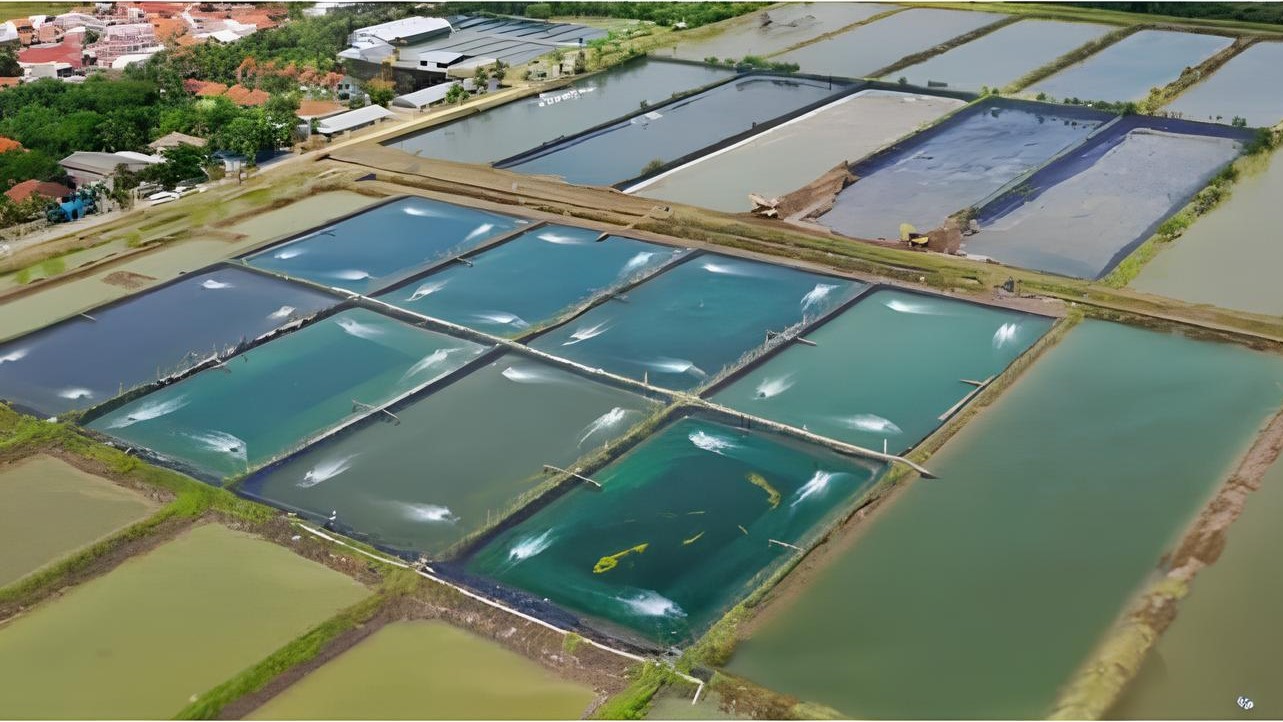

Water is an important factor in shrimp cultivation, the condition of the water in the pond can determine the success of subsequent cultivation, therefore it is important for farmers to regularly check the quality of their pond water, because by knowing the condition of the existing pond water, farmers can find out or predict obstacles that may arise. will face.
The color of the water in shrimp ponds is one of the easiest indicators of water conditions to observe. It is necessary to observe changes in water color regularly, because the color of the water can indicate the level of alkalinity in the pond. If there are frequent color changes in one day, such as yellow in the morning and then green in the afternoon, this indicates a rapid change in pH, which will stress the shrimp and affect the shrimp's immunity. Changes in the color of pond water also indicate the type of plankton contained in it. The type of plankton that is good for ponds is planktonChlorophyta which has green pigment. The presence of this type of plankton can make pond water green.
Thus, the water color that is good for the life, growth and development of shrimp is green water. However, green water is not always the benchmark for a good pond. because there are other good types of plankton that do not cause green color in ponds. An example isDiatomae, a type of plankton that can cause a light brown color in pond water. So, cultivators don't need to worry if their ponds have light brown water or the water looks cloudy. The color of the water can characterize the condition of the pond. When the color of the shrimp pond water shows an indication that it is not good for the life of the shrimp, treatment and handling measures need to be taken. Below we provide information about water conditions based on color and how to change the color of pond water and how to handle it:
Table 1. Pond water color type

1. Greenish yellow, and bright green.
The lack or instability of phytoplankton in vannamei shrimp ponds can be a serious concern for farmers. Phytoplankton plays an important role in the pond ecosystem, because it is a natural food source for shrimp and helps maintain the biological balance of the water. Therefore, it is important for farmers to observe and identify signs of a lack or instability of phytoplankton in pond water.
One sign that can be observed is a change in water color. If the pond water shows an unstable color, such as greenish yellow or bright green, this can indicate a lack of phytoplankton which is needed to support shrimp life. In situations like this, farmers can take steps to improve water conditions.
First of all, applying additional TSP (SP-36) fertilizer can be a solution. This fertilizer contains important nutrients that can stimulate the growth of phytoplankton. By providing this fertilizer, farmers can help increase the phytoplankton population in pond water.
However, if after applying TSP (SP-36) fertilizer the watercolor still changes, the next step is to add dolomite. Dolomite is a source of calcium and magnesium which can help stabilize water pH. Adding dolomite at the right dose can help reduce pH fluctuations which can be detrimental to phytoplankton growth.
2. Dark green
This condition shows signs of the presence of phytoplankton in vannamei shrimp ponds in moderate and stable quantities, farmers need to take appropriate action to maintain the balance of the water environment and support optimal shrimp growth.
First of all, when the phytoplankton in the pond appears to be in a moderate and stable condition, farmers are advised to apply a little TSP (SP-36) fertilizer. This fertilizer should be applied carefully and in the right amount according to the plant's needs. Doses that are too high can result in an excessive increase in nutrients in the water, which in turn can cause excessive algae growth or "bloom", which can disrupt the pond ecosystem and cause health problems for the shrimp.
After applying a small amount of TSP (SP-36) fertilizer, farmers need to regularly monitor the development of phytoplankton in the pond. Careful observation of the water color, clarity level, and overall balance of the pond ecosystem is important to identify possible changes and take corrective action if necessary.

TSP fertilizer (SP-36)
3. Greenish brown
The condition of the water with a greenish brown color is a pretty good sign.When water conditions in vannamei shrimp ponds indicate that the phytoplankton population is quite good and stable, farmers need to maintain optimal environmental balance by adopting appropriate maintenance strategies. Regular maintenance is the key to maintaining good water quality and supporting healthy shrimp growth.
One action that can be taken is to provide additional fertilizer regularly every week. This fertilizer aims to provide additional nutrients needed by phytoplankton for their growth. The fertilizer used should be chosen carefully to ensure that its nutritional composition meets the needs of phytoplankton and does not cause an excessive increase in nutrients in the water. Phytoplankton nutritional requirements can vary depending on environmental conditions and the dominant type of phytoplankton in the pond.
4. Bluish green
When signs show the development of blue-green algae phytoplankton and also signs that the shrimp are experiencing problems, quick and appropriate action needs to be taken to maintain the health of the shrimp and environmental balance in the pond.
First of all, replacing water is an important step to overcome water conditions that may be polluted by the development of blue-green algae phytoplankton. This phytoplankton can release toxins that are harmful to shrimp and the pond ecosystem as a whole. By changing the water regularly, farmers can help reduce the concentration of toxins in the water and create a safer environment for shrimp.
Apart from changing the water, application of dolomite at a dose of 10 ppm is also required. Dolomite is a source of calcium and magnesium which can help stabilize the pH of water. Optimal water conditions with a stable pH are very important for shrimp health. By providing dolomite, cultivators can help reduce pH fluctuations that may be caused by the growth of blue-green algae phytoplankton.
Furthermore, applying TSP (SP-36) fertilizer also needs to be considered. This fertilizer contains important nutrients that can help promote healthy phytoplankton growth and support the balance of the pond ecosystem. However, the use of this fertilizer must be done carefully and according to the recommended dosage to avoid excessive increase in nutrients in the water.
5. Dark green
When signs indicate the presence of toxic phytoplankton, such asMicrocystis sp., and pond water feels slippery or rubbery, as well as many sick shrimp, immediate action is needed to overcome these unfavorable conditions and support shrimp health.
First of all, if possible, changing the water is the main step that must be taken. Complete water changes can help reduce the concentration of toxins produced by toxic phytoplankton and improve overall water quality. By replacing polluted water with clean, fresh water, farmers can create a safer and healthier environment for shrimp.
In addition to water replacement, dolomite lime application should also be considered as part of the treatment. Dolomite lime, which contains calcium and magnesium, can help stabilize the pH of the water. Optimal water conditions with a stable pH are important for shrimp health. By providing dolomite lime, cultivators can help balance the pH of the water and reduce fluctuations that may be caused by the presence of toxic phytoplankton.
Furthermore, it is important for farmers to monitor the condition of shrimp regularly and identify shrimp that are sick or affected by poor water conditions. Sick shrimp can be isolated and given appropriate additional care, such as treatment with recommended drugs or other special treatment according to their respective health conditions.
6. Dark brown
Conditions where the water in ponds changes color to dark brown or slightly red, especially in ponds that use soil, can be a sign that the condition of phytoplankton is still lacking. This can be caused by the presence of TSM (Total Suspended Matter) in the water, which causes the water to appear cloudy and have an unusual color.
To overcome this condition, farmers need to take appropriate steps to improve water quality and support better phytoplankton growth. One step that can be taken is to use additional fertilizer, such as urea and TSP (SP-36), with a ratio of 2:1. This fertilizer aims to provide additional nutrients needed by phytoplankton for their growth. Urea and TSP (SP-36) contain nitrogen and phosphorus, which are important nutrients for phytoplankton growth.
Apart from that, dolomite application at a dose of 3.5 ppm is also required. Dolomite is a source of calcium and magnesium which can help stabilize the pH of water. Water pH stability is very important to support optimal phytoplankton growth. By providing dolomite, farmers can help maintain the pH balance of the water and improve environmental conditions that support the growth of phytoplankton.
Furthermore, further land reclamation is also needed as an effort to improve the overall condition of the pond. This land reclamation can include various actions, such as cleaning and repairing pond bottoms, managing water resources, and controlling other environmental factors that can affect water quality and phytoplankton growth.

Dolomite lime for water pH stability
7. Reddish brown
The color of this water is kEthical pond conditions indicate the emergence of toxic phytoplankton such asTrichodesmium, Noctiluca, Gymnodinium, dan Gonyaulax, as well as showing signs that the water in the pond is acid sulfate, comprehensive remedial measures need to be taken immediately to overcome this problem and restore environmental balance in the pond.
First of all, it is important to carry out complete pond reclamation. Pond reclamation involves a series of actions to improve the condition of the pond bottom, remove accumulated organic material, and improve water circulation. This aims to remove toxic substances that may accumulate at the bottom of the pond and improve overall water quality.
In addition, the application of lime and urea fertilizer during the pond preparation process is an important step in overcoming water conditions that originate from acid sulfate. Lime is used to neutralize the acidity of the water and increase its pH, while urea fertilizer contains nitrogen which can help improve environmental conditions suitable for healthier phytoplankton growth.
Apart from pond reclamation and application of chemicals, another step that needs to be taken is washing the pond repeatedly. Regularly washing ponds can help remove toxic substances and reduce excessive nutrient concentrations in the water. This can help reduce the growth of toxic phytoplankton and create a healthier environment for the shrimp.
8. Black
Conditions where phytoplankton do not grow and there is a lot of decay of organic material, which causes the formation of black mud at the bottom of the pond, is a sign that the water environment does not support healthy phytoplankton growth. To overcome this problem, effective and appropriate remedial steps need to be taken to restore environmental balance in the pond.
The first step that needs to be taken is to remove the black mud that forms at the bottom of the pond. This black mud is usually an accumulation of decomposed organic material and can inhibit water circulation and cause unhealthy water conditions. The process of removing black mud can be done using mechanical tools such as excavators or manually.
Furthermore, using burnt lime to neutralize acidity and overcome the problem of black mud can also be an effective solution. Burnt lime contains calcium oxide which can help increase the pH of the water and reduce the toxicity caused by the presence of black mud. Application of burnt lime can be done by sprinkling it evenly over the surface of black mud or by mixing it directly into pond water.