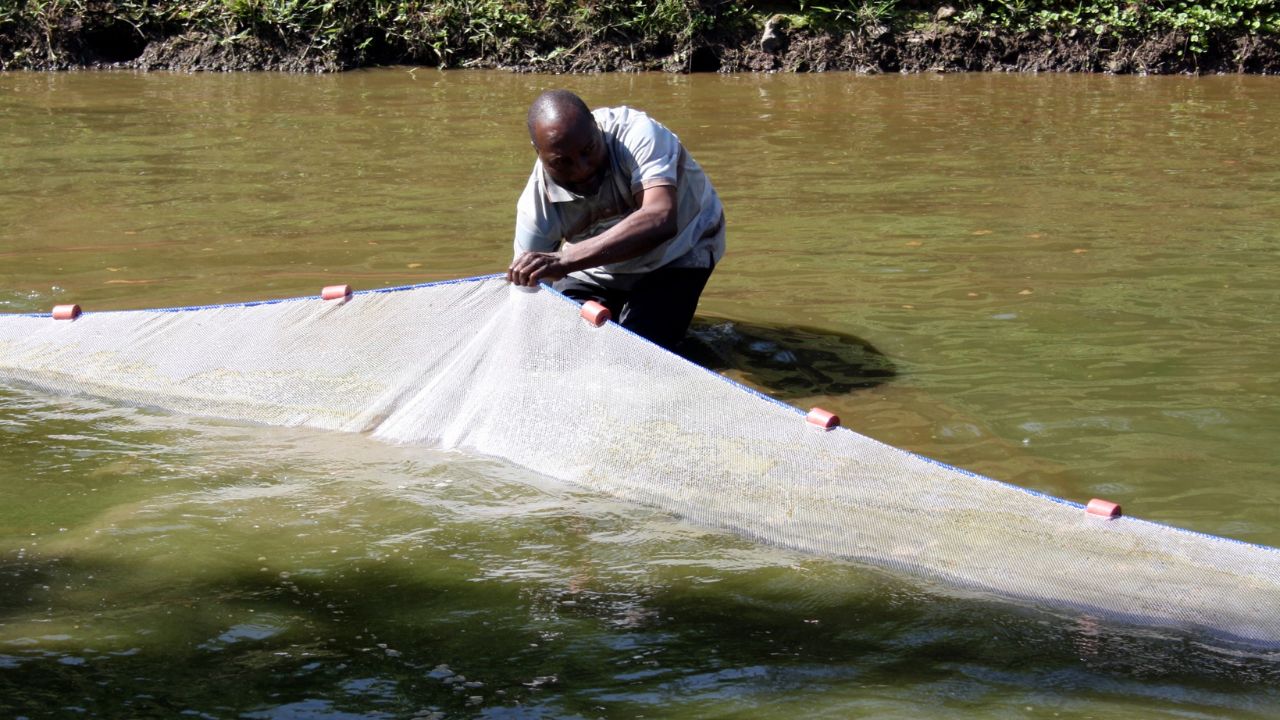

The Kenyan landscape, graced by Lake Victoria the freshwater heart of the African continent should theoretically guarantee food and nutritional sovereignty for its people. Yet, despite its vast aquatic resources, a deepening crisis of ecological collapse and surging demand has left millions facing a profound nutritional deficit, sparking the need for a radical transformation in aquaculture.
The fisheries and aquaculture sector contributes approximately 0.7 percent to the national Gross Domestic Product (GDP) and supports the livelihoods of more than 1.5 million Kenyans. However, the reality on the ground presents a sharp irony: a nation with over 1.14 million hectares (2.81 million acres) of inland water potential is currently facing an annual fish supply deficit exceeding 553,000 metric tons. The widening gap between natural resource availability and the reality on the dinner table is not merely a statistical issue. Per capita fish consumption in Kenya currently stands at only 4.3 to 4.5 kilograms (9.4 to 9.9 pounds) per year, lagging far behind the African continental average of 9.7 kilograms (21.3 pounds). To realize the Vision 2030 targets, the Kenyan government aims to more than double fish consumption to 10 kilograms (22 pounds) per capita, requiring at least 670,000 tons of fish to meet a population projected to reach 67 million. This massive deficit represents a void that holds the potential for a food security revolution, provided the structural root causes can be unraveled and resolved.
Twilight at Lake Victoria: ecosystem collapse and social migration
To understand the urgency of aquaculture in Kenya, the analysis must be drawn toward the epicenter of national inland fisheries. For decades, Lake Victoria contributed more than 95 percent of Kenya's total inland fishery catch. However, the lake is currently experiencing a massive biodiversity crisis, where wild catch volumes specifically Nile tilapia and Nile perch are reported to have plummeted by a drastic 25 percent within the last year.
This decline is the culmination of multidimensional ecological pressures. Overfishing practices have reached a critical point; a hydro-acoustic survey revealed that 94 percent of Nile perch in Lake Victoria are caught before reaching a maturity size of 50 centimeters (19.6 inches), causing the destruction of natural regeneration cycles. This damage is exacerbated by lethal pollution from industrial waste, agricultural chemical runoff, and the invasion of water hyacinth weeds covering up to 5 percent of the lake’s surface, which reduces the dissolved oxygen essential for aquatic biota

Fishing boats along the shores of Lake Victoria, Dunga Beach, Kisumu County, Kenya: Wikimedia Commons/Franklin Mutumba
The socio-economic impact of this ecological collapse is deeply concerning. Fishers who consistently return with empty nets eventually give up, converting their fishing boats into tourist transport vessels. Furthermore, the capture fisheries sector is losing its appeal among the younger generation. Instead of going to sea, many coastal youths choose to migrate to Gulf countries in search of a livelihood, leaving fishing villages in economic stagnation.
The import invasion and the food sovereignty dilemma
Amidst the shrinking wild catch, the void in the Kenyan fish market has been rapidly filled by imported products. Kenya currently brings in approximately 20,000 tons of frozen tilapia annually, the majority of which is imported from China. The presence of imported fish has sparked a fierce debate regarding food security and the survival of the domestic industry.
On one hand, imported fish offers protein at a very low price. Tilapia from China is often sold in local markets at approximately 30 Kenyan Shillings (KES) per kilogram (13.6 KES per pound), which is notably only one-third of the local fish production cost, ranging between 100 and 200 KES per kilogram (45.3 to 90.7 KES per pound). This affordability means that 62 percent of households in regions like Kisumu consume it regularly. However, these imports are often classified as "discard fish," weighing 200–300 grams (0.4–0.6 pounds), which do not meet export standards for developed nations.
On the other hand, this onslaught of low prices destructively distorts the local market. Local farmers and fishers are unable to compete rationally. Approximately 40 percent of local fishery actors report a loss of livelihood and a decline in socio-economic status due to the drop in domestic fish absorption. Although the Kenyan government briefly slashed the volume of Chinese fish imports by 54.4 percent in 2023 to protect the local industry, the import valve remains an emergency safety vent that cannot be fully closed as long as the domestic aquaculture sector is unable to produce massively and efficiently.

Fresh tilapia fish from Lake Victoria for export: Wikimedia Commons/VickyOmondi
The feed cost trap and ecological disaster
Aquaculture should be the primary way out. However, the fish farming industry in Kenya is currently trapped in an operational stalemate rooted in one crucial component: feed management.
Feed costs absorb 50 percent to 70 percent of a farmer’s total operational burden. The price of commercial feed on the market has soared, surpassing KES 3,500 per bag (25 kg / 55.1 lbs), or approximately KES 124 to KES 150 per kilogram (56.2 to 68.0 KES per pound) for high-protein feed. These high costs are inseparable from the feed manufacturing industry's dependence on imported raw materials, such as maize and soybean meal from neighboring countries, which are vulnerable to supply and weather fluctuations.
The stifling capital constraints force small-scale farmers to take compromise measures that often prove fatal. They turn to low-quality alternative feeds that are nutritionally unbalanced, such as raw bran or kitchen waste. This decision triggers two devastating domino effects on profitability: first, poor nutrition causes fish to suffer from stunting and extends the harvest period; second, undigested feed settles at the bottom of the pond, decomposing into toxic ammonia and triggering local ecological disasters in the form of mass fish kills due to declining water quality.
Leaping beyond tradition with biofloc technology
To escape stagnation, disruptive technological intervention is absolutely necessary. Relying on traditional earthen ponds, which are land-intensive and prone to pollution, is no longer relevant. The future of Kenyan aquaculture lies in Biofloc Technology Systems (BFT).
Biofloc technology operates by engineering the carbon and nitrogen (C:N) ratio in the water. The addition of carbon stimulates heterotrophic bacteria to convert toxic ammonia waste from leftover feed and fish excrement into flocs or microbial protein clumps. These flocs are then consumed by the fish as an additional nutritional source. This system automatically solves two problems at once: cleaning the water without the need for wasteful water circulation and reducing external feed requirements.
When compared scientifically, the efficiency gap between traditional ponds and BFT is stark, as detailed in the following performance parameters:

The data above demonstrates how biofloc is capable of multiplying land productivity by more than ten times (from 0.4 to 7.5 kg/m²) while simultaneously slashing water consumption by 95 percent. More importantly, the improvement in the Feed Conversion Ratio (FCR) from 2.0 to 1.3 means farmers require significantly less feed to produce one kilogram of fish meat a radical efficiency that returns profit margins to the farmers' pockets.
Feed independence based on local commodities
Although the biofloc system is more efficient, feed remains the largest expenditure component. The long-term solution is to break the long supply chain and the monopoly of large manufacturers through self-sufficient, local-scale feed production. This strategy utilizes the concept of open-source feed formulations that are transparent and can be mixed directly by farming entities.
An ideal formulation is designed by maximizing the potential of Kenya's domestic agricultural commodities. Below is the scientific breakdown of a composition that can be adapted using small-scale extruder machines:
- Soybean meal (38.5 percent): Acts as the primary plant protein backbone with high digestibility.
- Local fish meal / Omena (19.2 percent): Rastrineobola argentea or Omena is a small pelagic fish species endemic to Lake Victoria. Utilizing non-human consumption quality Omena ("trash fish") in feed provides a complete amino acid supply. The main challenge is improving drying methods, which have traditionally been done on the ground, to avoid E. coli contamination and maintain fish meal quality.
- Maize bran (14.4 percent): The primary source of carbohydrates and energy, abundant in the local agricultural sector.
- Rice bran (9.6 percent) & sunflower seeds (9.6 percent): Added to provide a balance of fiber and essential lipids for fish metabolism.
- Wheat bran (4.8 percent): Functions both as a micronutrient source and a natural binder to maintain pellet stability in water.
The core strength of this formulation is its flexibility. The composition is not rigid but is analyzed and adjusted dynamically in real-time according to harvest seasons, market prices, and the availability of local raw materials in Kenya, ensuring that the basic production cost can be kept to a minimum.
The nucleus-plasma partnership: weaving a socio-economic safety net
Cutting-edge technology and feed independence will not have a massive impact if they are only enjoyed by a single corporation. An inclusive scheme is required to empower thousands of fragmented small-scale farmers. The most relevant business architecture to implement is the Nucleus-Plasma Model.
In this ecosystem, we can position a hypothetical entity such as "Banglele Farm" as an example of an ideal "Nucleus" (Hub). The Nucleus does not operate to kill off small competitors but acts as an anchor for innovation and a safety net for its partners (Plasma). This symbiosis is divided into several strategic functions:
- Genetic Center (Hatchery): The Nucleus establishes self-sufficient hatchery facilities to distribute high-quality fingerlings with superior genetics to the Plasma network.
- Affordable Feed Supply Center: Through its mini feed mill, the Nucleus supplies nutrient-rich open-source feed to Plasma farmers at cost price, eliminating unfair margins from middlemen or large manufacturers.
- Continuous Knowledge Transfer: Plasma farmers are provided with intensive training on biofloc system adoption, water quality management, and biosecurity to ensure uniform harvest standards.
- Guaranteed Market Absorption (Off-taker): This is the most critical breakthrough. For too long, small farmers have been ruined by bearing market price risks alone when faced with imported products. In this model, the nucleus entity provides financial certainty by absorbing 100 percent of the harvest from Plasma partners at a fair price.
Roadmap to full downstreaming
Building an integrated ecosystem requires a measurable, phased five-year roadmap:
- Phase I – Foundation (Year 1): The proof-of-concept stage. This begins with building Nucleus Hub facilities, including pilot biofloc ponds, a small-scale feed mill (100 kg/hour or 220.4 lbs/hour), and hatchery installations. This phase focuses on clinical feed trials on local fish and concludes with the first successful harvest cycle.
- Phase II – Expansion (Years 2-3): Operations are scaled up. The Plasma program is officially launched. Recruitment, training, and production inputs are provided to the first wave of farming communities. The main focus is achieving stable harvest volume aggregation across the network.
- Phase III – Integration (Years 4-5): Mastering the entire value-chain margin. The scheme culminates in downstreaming, namely the construction of a commercial-scale fish processing facility and the launch of retail seafood products (for example, "Banglele Farm Fish Shop & Eatery"). This downstream integration ensures that economic added value remains within and enriches the local ecosystem.
Sovereignty begins with the ecosystem
The fishery supply crisis in Kenya and the degradation of Lake Victoria offer one essential lesson: food self-sufficiency will not be achieved merely by forcing fishers to cast their nets further, or by covering deficits through unlimited import valves. True food sovereignty is a manifestation of the ability to build a self-sufficient ecosystem.
The efficiency leap from biofloc technology and the deconstruction of feed costs through local open-source formulations offer highly practical scientific solutions. However, these innovations will only find their resolution if implemented within an equitable socio-economic scheme like the Nucleus-Plasma model. This approach dismantles the smallholder farmers' fear of market failure, empowers them with knowledge, and transforms competition into collaboration.
This partnership prototype is not just a regional business proposal, but a universal blueprint for a "Blue Revolution". This model is highly relevant for adoption, adaptation, and replication by any developing nation struggling to save its future generations from nutritional crises while restoring the dignity of food heroes in coastal and rural areas.