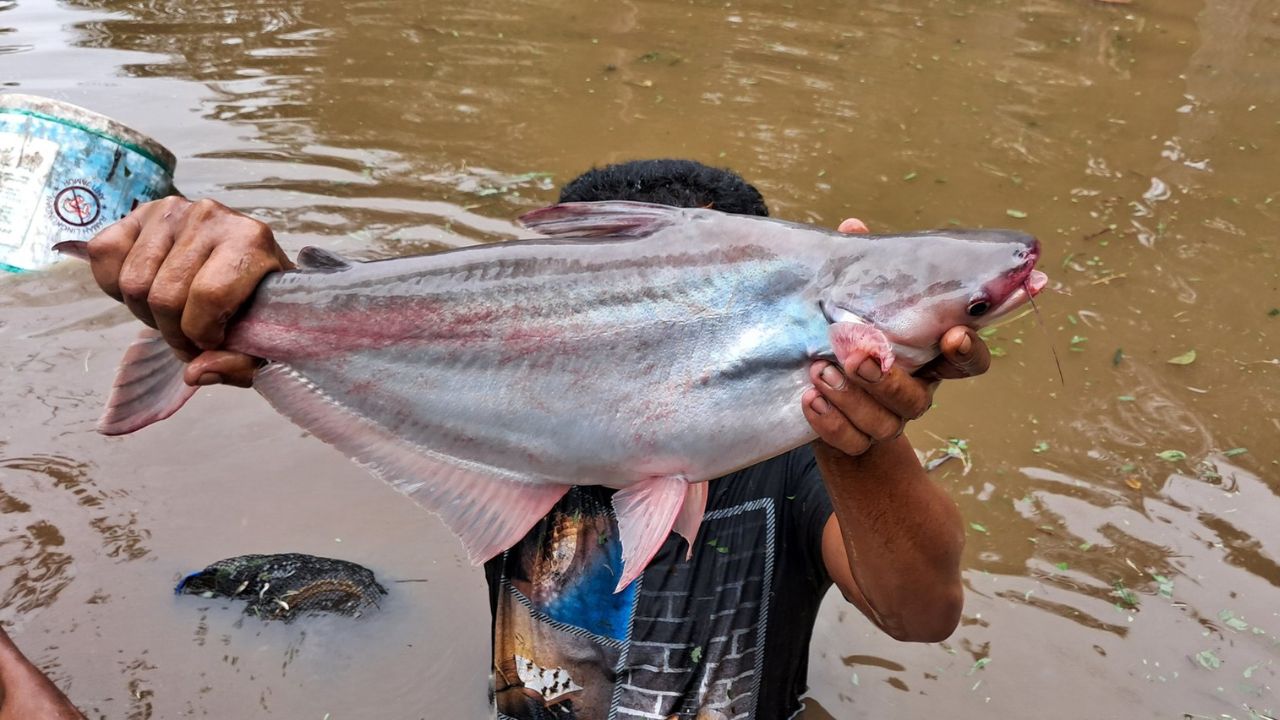

The cultivation of pangasius (Pangasius sp.) has become one of the fastest-growing sectors in Indonesia's aquaculture industry. As a leading freshwater fish commodity, pangasius enjoys consistently rising demand, both domestically and internationally. According to data from Indonesia's Ministry of Marine Affairs and Fisheries (KKP), national production of pangasius reached approximately 340.444 tons in 2022, increasing to 349.378 tons in 2023. These figures highlight the substantial potential of this industry to drive economic growth within the fisheries sector while simultaneously improving the welfare of local communities, particularly fish farmers.
The success of pangasius farming is closely tied to the application of appropriate technologies that support efficient and productive operations. In recent years, technological innovations in aquaculture have significantly contributed to increased productivity and cost reduction. These advancements include the adoption of water recirculation systems, the implementation of biofloc technology, the use of low-protein feed strategies, and the provision of precisely formulated nutritional feeds. Such innovations have proven essential in optimizing resource use and enhancing the sustainability of pangasius farming practices.
The importance of feed management in pangasius fish farming
In pangasius aquaculture, feed management is a critical factor that requires serious attention. The quality, quantity, and feeding schedule play a significant role in determining the success of fish farming. Providing feed regularly and in accordance with the fish’s needs supports optimal growth, enhances production efficiency, and maximizes profitability. On the other hand, poor feed management—such as overfeeding or underfeeding—can lead to negative outcomes. Overfeeding not only results in wasted production costs but also pollutes the aquatic environment due to uneaten feed residues. Conversely, insufficient feeding can hinder fish growth and reduce the quality of the harvest.
To address these challenges, modern feed management technologies have been developed and implemented in various regions, including in pangasius farming. One effective approach is the 90-percent satiation feeding system, introduced by the American Soybean Association (ASA). This method is designed to optimize feeding efficiency by providing feed up to 90 percent of the fish’s satiation capacity. The principle ensures that fish receive sufficient nutrition without excessive waste. This approach not only promotes optimal fish growth but also helps maintain water quality in aquaculture ponds.
The 90-percent satiation feeding technology was tried in Indonesia from 2004 to 2006, particularly in fast-flowing pond systems and floating net cages for species such as carp and tilapia. The trials demonstrated that this method significantly improved feed utilization efficiency while reducing environmental impact. Although initially applied to specific fish species, the principles of this technology are highly relevant to pangasius aquaculture as well.

Feeding of pangasius fish by Minister Sakti Trenggono, KKP
The working principle of 90 percent feeding technology
The principle behind the 90% feeding technology in fish farming is simple yet effective in enhancing efficiency. This technology is based on the concept of feeding fish up to 90% of their satiation level, rather than allowing them to eat until fully satisfied. This approach aims to reduce leftover and wasted feed, thereby increasing feed utilization efficiency. Moreover, providing feed in alignment with the fish's actual needs supports improved metabolism, as the energy derived from the feed is optimally utilized for growth and other activities.
Initially, this technology was applied to fish reared in fast-flowing ponds and floating net cages, such as carp and tilapia. Trials conducted by the American Soybean Association (ASA) between 2004 and 2006 produced promising results. For example, in tilapia, feed efficiency improved by up to 20%, while feed-related operational costs were reduced by as much as 15%. These findings demonstrate that this straightforward yet precise approach can significantly boost productivity without proportionally increasing costs.
The 90% feeding technology is also highly relevant for pangasius farming, a species of bottom-feeding fish. According to research published by the Sukabumi Freshwater Aquaculture Research Center (BBPBAT), pangasius has a feed conversion ratio (FCR) ranging from 1.5 to 1.8 under proper feed management. By applying this technology, the FCR can be further improved to approximately 1.2–1.4, meaning that each kilogram of feed can yield more fish meat. This reduction in FCR not only lowers production costs but also minimizes organic waste generated from uneaten feed.
Additionally, the implementation of this technology helps maintain the environmental quality of aquaculture systems. In pangasius farming, environmental pollution often poses a significant challenge due to the accumulation of feed waste at the pond bottom. By adopting the 90% feeding system, feed waste can be significantly reduced. Other studies on traditional pangasius farming systems have shown that efficient feed management can lower organic material pollution at the pond bottom by up to 30%. This reduction contributes to healthier fish and lowers the risk of disease outbreaks.
Benefits of applying this technology to pangasius fish cultivation
The implementation of a feeding system that provides 90% of the fish's satiation level offers significant benefits in pangasius aquaculture. These advantages are not only evident in production efficiency but also contribute to environmental sustainability and improved productivity. Below are the key benefits of this innovative approach:
Enhanced feed efficiency
One of the primary benefits of this technology is the improvement in feed utilization efficiency. Feed often constitutes the largest expense in aquaculture, accounting for 60–70% of total operational costs. By adopting the 90% satiation feeding method, the feed provided to the fish is optimized, minimizing waste.
Research conducted by the American Soybean Association (ASA) demonstrates that this technology can enhance feed efficiency by 15–20% compared to conventional methods. For example, under traditional practices, producing 1 kilogram of fish typically requires 1.8 kilograms of feed (Feed Conversion Ratio or FCR of 1:1.8). With this system, the FCR can be reduced to 1:1.4–1.5. This reduction directly decreases feed costs and increases profit margins for farmers.
Improved fish growth
Providing feed that aligns with the fish’s actual needs promotes better metabolism and supports healthier growth. Fish fed optimally have sufficient energy for growth without overloading their digestive systems.
According to research by the Sukabumi Center for Freshwater Aquaculture Research and Development (BBPBAT), fish fed using the 90% satiation approach demonstrated a higher daily growth rate (DGR), reaching up to 2.8% per day compared to 2.5% per day in fish overfed using conventional methods. This accelerated growth enables shorter harvest cycles, thus allowing for faster production turnover.

Hasil panen ikan pangasius dengan pertumbuhan optimal, BPPP Banyuwangi
Reducing environmental impact
One significant advantage of this technology is its ability to reduce environmental impacts, a common challenge in intensive aquaculture. Uneaten feed often accumulates at the bottom of fish ponds, leading to organic pollution that degrades water quality and disrupts aquatic ecosystems. This system minimizes uneaten feed, helping to maintain water quality. Research conducted by the Fisheries Research Center (Puslitbangkan) indicates that this approach can reduce the organic matter content at the pond bottom by up to 30%, thereby lowering the risk of fish diseases and reducing the need for chemical treatments or antibiotics.
Improved productivity
Higher feed efficiency and cleaner cultivation environments directly contribute to increased productivity. Pangasius fish raised in optimal conditions tend to achieve higher survival rates. According to data from the Ministry of Marine Affairs and Fisheries (KKP), the survival rate of pangasius in aquaculture using this technology can reach 90–95%, significantly higher than the traditional method's average of 80–85%. With better survival rates, harvest yields can increase by 10–15% without requiring additional feed or fish stock.