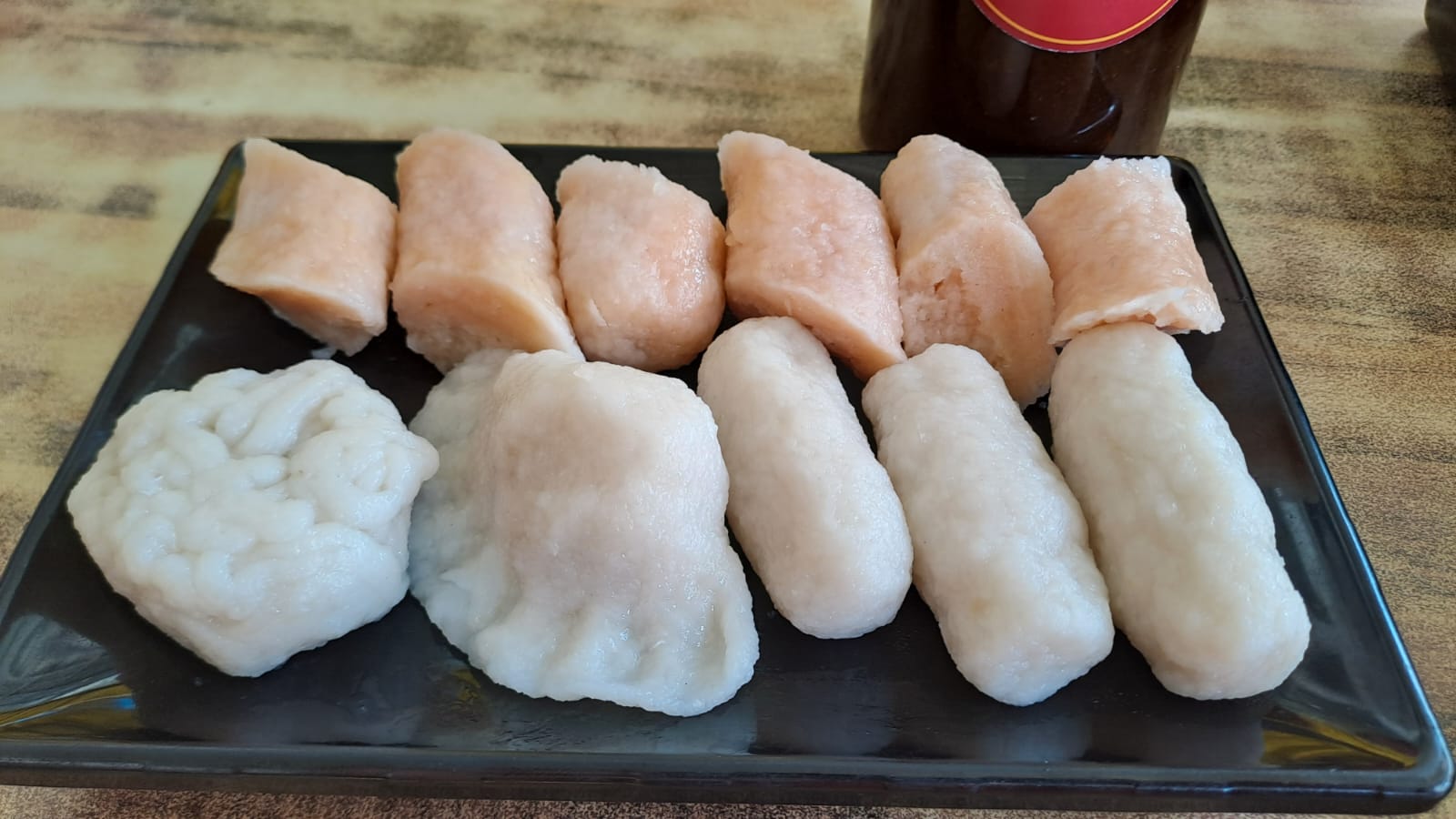

Empek-empek, the culinary heritage of South Sumatra has made its mark on the Indonesian culinary world with its alluring uniqueness. From the two regions where empek-empek originates, Bangka and Palembang, two variants of empek-empek emerge that stand out with striking differences, not only in terms of taste, but also in various aspects of the manufacturing process. Even though both are made from fish as the main ingredient, the differences in fish selection, texture and complementary sauces are the differences that make them both have unique characteristics.
Empek-empek Bangka, using mackerel or tamban fish as the main ingredient, displays a distinctive savory taste. The texture of Bangka empek-empek tends to be denser and thicker, providing a chewy but still soft biting experience. Meanwhile, Palembang's empek-empek, which often uses belida fish or snakehead fish, has a chewier and softer texture. Apart from that, there are complementary sauces for Palembang empek-empek, such as cuko sauce, coconut milk sauce, or a sauce with a mixture of vinegar, sugar, chili and garlic which gives a touch of sour, sweet and spicy taste that is appetizing.
History of empek-empek; culinary trail typical of South Sumatra
Empek-empek, a culinary icon from South Sumatra, traces a long history involving a diversity of cultural influences. Believed to have originated from the contribution of the Chinese community who settled in Palembang in the 16th century, this food was originally known as"empek-temic". This dish consists of a combination of fish and sago flour to create a unique taste. As time goes by, interest and enthusiasm for this dish has become more widespread, inspiring its evolution into different variants, including what is known as empek-empek Bangka.
Initially, "empek-temic" was prepared from a mixture of fish and sago flour which was then fried. This food gained immense popularity among local people and slowly spread until it became part of the culinary culture of South Sumatra. Differences in raw materials, textures and complementary sauces then give rise to variations, creating unique identities for Bangka empek-empek and Palembang empek-empek. Each has unique characteristics that excite the taste and reflect the culinary richness of the region.
Empek-empek Bangka; uniqueness in terms of taste and raw materials
Empek-empek Bangka stands out with its unique characteristics which refer to the raw materials used. Mackerel fish, as the main choice, gives a characteristic taste to Bangka's empek-empek. The unique savory taste produced by this mackerel is a special attraction for culinary lovers.
The process of making Bangka empek-empek also shows significant differences. The dough used tends to be denser and thicker when compared to the Palembang version. This creates a chewy texture but remains soft when eaten. The size of Bangka empek-empek also tends to be smaller, often shaped into small balls or ovals, giving a unique sensation when enjoyed.
Not only in terms of taste, but also in appearance and texture, Bangka empek-empek offers a different eating experience. The use of mackerel fish which has a distinctive taste is the main differentiator in its savory taste. The manufacturing process which is denser and thicker provides a new dimension in terms of chewiness and softness when bitten, while the smaller size also provides added value in enjoying it. This combination creates a clear identity for Bangka empek-empek, making it a unique choice for culinary lovers who want to explore the diversity of Indonesian flavors.

Bangka empek-empek is delicious with its distinctive mackerel fish taste.
Empek-empek Palembang; deliciousness and variety of variants
Palembang's empek-empek, like Bangka's empek-empek, also has impressive uniqueness. The use of belida or snakehead fish in making Palembang empek-empek gives it a distinctive texture, chewy but soft. The manufacturing process tends to be more complex, involving special techniques that contribute to achieving the right texture. The precision in the manufacturing process shows how important texture consistency is in Palembang empek-empek.
Apart from the texture, another striking difference lies in the size and shape. Palembang empek-empek tend to be larger with flat shapes that vary in size, from small to quite large. This variation provides more diverse choices for connoisseurs. Not only from taste and texture, but also from the dimensions and size of the dish.
Complementary sauces are also a characteristic attached to Palembang's empek-empek. Different from the Bangka version, Palembang's empek-empek is known for various types of sauce, such as cuko sauce, coconut milk sauce, or a sauce made from a mixture of vinegar, sugar, chilies and garlic. These sauces provide a distinctive taste, combining sour, sweet and spicy elements in one dish, providing a flavor dimension that is so complex and attractive to its connoisseurs.
Empek-empek Palembang, with its unique shape, texture and complementary sauces, is an attractive choice for culinary lovers who want to explore a variety of flavors. From complex manufacturing techniques to rich sauces, Palembang's empek-empek provides a rich and satisfying culinary experience for anyone who tastes it.
Harmony of taste and culture
The two variants of empek-empek, despite their striking differences, are clear evidence of Indonesia's culinary richness. They not only show variations in taste and texture, but are also a reflection of the rich culture and heritage of our ancestors that is continuously maintained. Behind the striking differences, there are traces of the influence of various cultures that arrived and coexisted in the development of this dish. This reflects the spirit of inclusion and adaptation of local communities to incoming cultural influences.
The people of Bangka and Palembang consistently maintain their respective authenticity and uniqueness in processing empek-empek. Both communities maintain their culinary traditions with great pride, illustrating the diversity and richness of Indonesia's culinary heritage. This ancestral legacy is not only visible in the empek-empek dish, but also in the local values and wisdom passed down from generation to generation.
The influence of various cultures that permeates the processing of empek-empek is proof of the dynamics of culture in Indonesia. These two variants reflect how the combination of various cultural elements, both local and foreign, creates unique and distinctive culinary delights. They are not just food, but a reflection of Indonesia's long history and cultural diversity which continues to develop over time.

Province Bangka Belitung, not only has beautiful natural charm, but also delicious culinary delights.
Taste both; awesome experience
For culinary fans, exploring the two variants of Bangka and Palembang empek-empek is an exciting taste adventure. The significant differences in raw materials, textures and complementary sauces make the experience of tasting both very interesting. The unique taste, from the distinctive savory taste of mackerel fish in Bangka's empek-empek to the complexity of the sauce in Palembang's empek-empek, invites connoisseurs to explore the diversity of Indonesian flavors.
Appreciating the empek-empek of Bangka and Palembang is not just about enjoying the delicious taste. More than that, the experience of enjoying these two dishes opens the door to a deeper understanding of the history and local wisdom behind the food. From the complex manufacturing process to the selection of different raw materials, they provide students with a window into the culture and values embedded in regional culinary traditions.
Tasting empek-empek Bangka and Palembang is not just about eating the food, but also about exploring the stories and values inherited from the past. These two dishes not only tempt the tongue, but also invite you to understand the history and richness of culture that continues to be preserved in every delicious bite.