
Broodstock fish are a vital component in the aquaculture breeding process, playing a key role in determining the quality and quantity of production outcomes. Fish that have reached maturity in age and size, and meet specific biological criteria—such as gonadal maturity and optimal health—can be used as broodstock. According to data from Indonesia’s Ministry of Marine Affairs and Fisheries (KKP), selecting superior broodstock can increase seed production by up to 30 percent. This underscores the importance of a meticulous selection process based on established standards.
One commonly used broodstock species is the Pangasius catfish. This species offers several advantages, including rapid growth, high reproductive rates, and resilience to a range of environmental conditions, such as fluctuations in temperature and water quality. Research published by the Freshwater Aquaculture Research Institute (BRPBAT) in Bogor indicates that Pangasius catfish exhibit a daily growth rate (Specific Growth Rate or SGR) of approximately 2–3 percent under optimal conditions. Additionally, the species can survive in water with pH levels ranging from 6.5 to 8.5, making it a cornerstone commodity in the aquaculture industry.
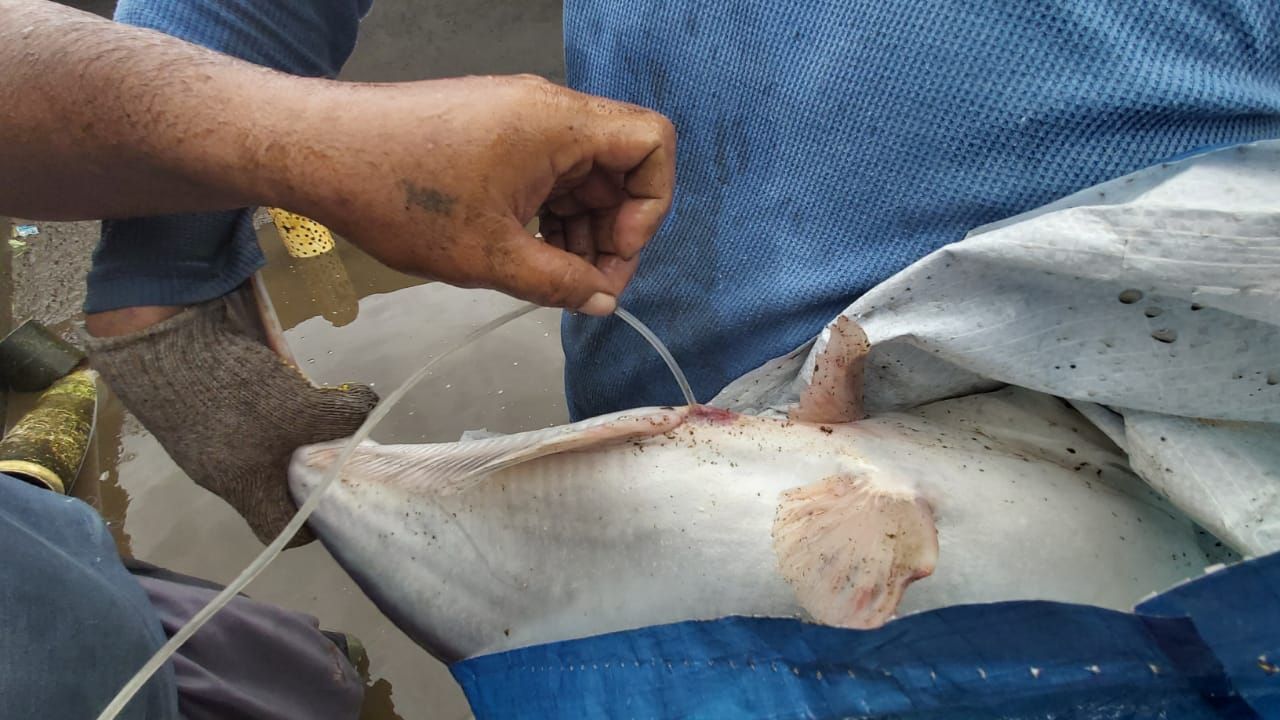
The selection process for Pangasius broodstock is rigorous, ensuring that only the best individuals are chosen for spawning. This process involves physical assessments, including symmetrical body shape, intact fins, and vibrant coloration. Health is another critical factor, as prospective broodstock must be free from parasitic or bacterial infections. Gonadal maturity is a primary indicator of reproductive readiness, as it significantly impacts spawning success. A study published in the Journal of Aquaculture Development reported that Pangasius broodstock with optimal gonadal maturity achieve a spawning success rate of over 85 percent—substantially higher than that of less biologically mature broodstock.
Selection of prospective pangasius fish broodstock

The process of selecting parent pangasius fish, BPBAT Tatelu
The selection of Pangasius broodstock is a crucial step in the breeding process, ensuring successful spawning and the production of high-quality seed. This selection is primarily based on gonadal maturity, a condition in which eggs or sperm are fully developed and ready for reproduction. Female broodstock with mature eggs can be fertilized by sperm from male broodstock, resulting in healthy larvae. The selection process typically takes place after gonadal maturation and before the spawning phase. According to research published by the Freshwater Aquaculture Research Center (BRPBAT) in Bogor, the success rate of Pangasius spawning increases by up to 85% when broodstock undergo stringent selection procedures.
High-quality Pangasius broodstock exhibit several key characteristics. One of the most important traits is rapid growth, which reflects efficient metabolism and superior genetics. Additionally, healthy broodstock must be free from physical defects, such as damaged fins, asymmetrical bodies, or visible injuries. Vitality is another essential criterion, as indicated by aggressive behavior. Healthy broodstock are more resilient during reproduction and capable of producing stronger offspring that can better withstand environmental challenges. Data from Indonesia’s Ministry of Marine Affairs and Fisheries (KKP) show that healthy Pangasius broodstock achieve a larval survival rate exceeding 80%.
To prevent inbreeding, or mating between closely related individuals, male and female broodstock must come from distinct genetic lineages. Inbreeding can lead to reduced genetic quality, manifesting as slower growth and increased susceptibility to disease. Therefore, selection should carefully consider the broodstock’s genetic origins. Suitable female broodstock should be at least 2.5 years old and weigh 1–3 kg per individual. They typically have a broad, short body shape, with a swollen abdomen extending toward the anus. The texture of the abdomen should be soft and smooth. A ready-to-spawn female will display swollen, dark red, and open genitalia. Male broodstock should be at least two years old, with a body weight of 0.8–2.5 kg. Their body shape is generally slender and elongated, and their genitalia are also dark red in color. When the area near the genitalia is gently pressed, mature males will release thick white fluid (sperm), indicating reproductive readiness.
The selection process extends beyond physical criteria to include environmental and nutritional management. Broodstock must be maintained in ponds with optimal water quality, including a temperature range of 27–30°C, a pH level of 6.5–8, and a minimum dissolved oxygen level of 4 mg/L. Their diet should be protein-rich, containing at least 30–35% protein, to support gonadal development. Research published in the Journal of Fisheries and Aquaculture Studies indicates that providing high-quality feed during the gonadal maturation phase can enhance egg quality by up to 25%.
Management of broodstock pangasius fish
Maintaining pangasius broodstock is a critical aspect of ensuring successful fish breeding. Effective broodstock management involves several key practices, including selecting appropriate rearing facilities, providing high-quality feed, and managing water quality.
Maintenance ponds
Ponds are the most commonly used facilities for rearing pangasius broodstock due to their flexibility in meeting the fish's biological needs. A widely adopted type is the soil-based concrete pond, which offers advantages in maintaining a stable rearing environment. One key benefit of this type of pond is its ability to prevent external water contamination, especially in areas with flat terrain. Additionally, natural elements from the soil, such as minerals, can improve water quality and enhance fish productivity.

Rearing brood pangasius fish in earthen ponds, BPBAT Tatelu
However, soil-based concrete ponds have some limitations. Water quality in these ponds can fluctuate significantly with the seasons. For instance, a study published in the Journal of Aquaculture Science found that water temperatures in soil-based ponds can vary by as much as 5°C between day and night, potentially affecting fish metabolism. Furthermore, sediment accumulation at the bottom of the pond must be periodically removed to prevent a decline in water quality.
Another option for broodstock rearing is floating net cages (FNCs), typically used in open water bodies such as rivers or reservoirs. FNCs offer several advantages, including the ability to rear fish at high densities in a relatively small volume of water and lower operational costs. This technology is also simple to use, making it easier for farmers to monitor and manage their broodstock.
However, there are risks associated with FNCs. One notable issue is the potential escape of fish into natural water bodies. A study published in the Aquatic Ecosystem Management Journal reported that over 10% of cultured fish in FNCs escaped into rivers due to damaged nets, which can disrupt local ecosystems. Additionally, FNCs are susceptible to unexpected water pollution, such as contamination from domestic waste or industrial activities near the rearing site.
Feeding management
A protein-rich diet plays a vital role in supporting the gonadal development of broodstock, thereby enhancing reproductive success. For pangasius broodfish, pellets with a minimum protein content of 35% are ideal, as they provide sufficient energy and support gonad maturation. Feed quantities should be adjusted based on the fish's body weight. According to guidelines, fish weighing between 500 and 1,000 grams require a daily feed ration amounting to 2% of their body weight, while those over 2,000 grams need a daily ration of 0.8–1%. Research published in the Aquaculture Nutrition Journal indicates that using feed with an optimal protein ratio can increase egg production by up to 20% compared to low-protein feed.
Feed is typically given 2–3 times a day, depending on the size and appetite of the fish. To balance protein requirements, feeds can be combined; for example, a 35% protein feed can be mixed with a 25% protein feed at a 1:4 ratio to meet daily biomass needs. Accurate feed calculations not only improve efficiency but also prevent waste and the accumulation of leftover feed, which can pollute the pond. Unconsumed feed can lead to increased ammonia (NH3) levels, which are harmful to fish health.
Water quality management
Water quality is crucial in maintaining pangasius broodstock as it directly affects their metabolism, appetite, and overall health. Optimal water conditions for broodstock include a temperature range of 22–29°C, a pH of 6.5–8, and a minimum dissolved oxygen (DO) level of 4 mg/L. These parameters are essential, as extreme changes in temperature or oxygen levels can induce stress in the fish, negatively impacting gonadal productivity. According to a study published by the Freshwater Aquaculture Research Institute (BRPBAT) in Bogor, dissolved oxygen levels below 3 mg/L can reduce fish appetite by up to 30%.
Water management focuses on introducing beneficial elements, such as oxygen and fresh water, while removing harmful substances like leftover feed, fish waste, ammonia, and carbon dioxide. Regular water replacement is critical, particularly when water quality deteriorates. Signs of poor water quality include murkiness, foul odors, or a deep green color caused by excessive phytoplankton growth. Water replacement is typically performed in stages, removing approximately one-third of the water from the bottom of the pond to reduce waste accumulation.