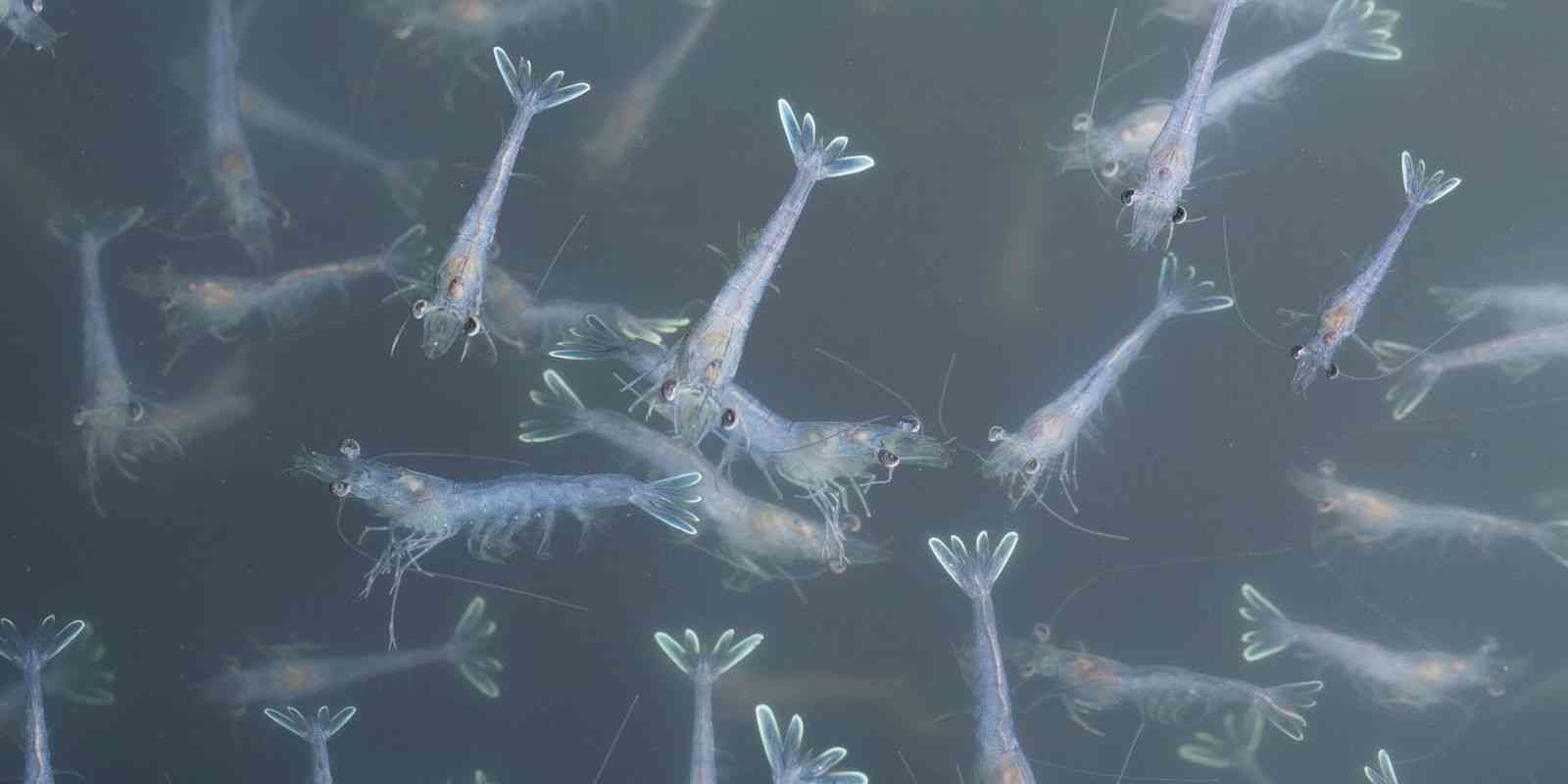

Nursery management in rearing vannamei shrimp larvae is a crucial process in shrimp cultivation which consists of various stages, starting from preparing rearing containers, stocking nauplii, feed management, to water quality management. Each stage in the larval rearing process requires special attention and handling to ensure that cultivation runs well and shrimp larvae can grow optimally.
This article will discuss in detail the important steps in preparing and managing the rearing of vannamei shrimp larvae, starting from washing techniques and managing aeration in rearing containers, seawater filtration and sterilization methods, to how to acclimatize nauplii and effective feeding strategies.
1. Preparation of maintenance container
The first step in rearing vannamei shrimp larvae is preparing a rearing container or tub. This process begins by washing the tub to clean it of moss and dirt attached to it. Cleaning the tank is a crucial stage because dirt and moss attached to it can be a source of disease that is dangerous for shrimp larvae. To clean the tub, use 30 grams of detergent dissolved in two liters of fresh water. This detergent solution is then used to brush the walls and bottom of the tub using a strong brush, ensuring that every part of the tub is free of dirt.
Moss or dirt that is difficult to remove requires special treatment using a chlorine solution (C20H16N4). Chlorine is dissolved in 10 liters of fresh water as much as 50 grams (200 ppm). This solution is then sprayed on areas that are difficult to clean and left for 1-2 hours so that the chlorine can react with dirt and moss, making the cleaning process easier. After the specified time, the tub is brushed again and rinsed with fresh water until the smell of detergent and chlorine is completely gone. This step is very important to ensure that there are no chemical residues left that could harm the shrimp larvae.
Apart from the tub, other equipment such as hoses, weights and air stones must also be cleaned thoroughly. This equipment is washed carefully to remove any dirt and microorganisms that may be attached. After washing, this equipment is dried in the sun. This drying process helps kill disease-causing microorganisms that may be carried by the aeration hose.
Aeration installation is carried out carefully to ensure even air distribution in the tub. The aeration system is set up with 20-21 points with a distance between aeration of around 70-80 cm. The length of the aeration hose is determined to be about 90 cm, with the aeration stones at the bottom of the tub being about 12 cm apart, and all connected to a one inch aeration pipe. The purpose of this setting is to ensure that air bubbles are evenly distributed in every corner and bottom of the tub.
Once all the equipment and tub are ready, the final step is to fill the tub with filtered sea water. The seawater used must be clean and free of contaminants to ensure optimal rearing conditions for shrimp larvae. The volume of water filled into the tub is 12 cubic meters per tub. Seawater filtering aims to remove small particles and pathogens that can damage water quality.
2. Preparation of maintenance media
The media used in rearing vannamei shrimp larvae comes from sea water which is taken using a pump submersible. This pump is placed at a distance of approximately ±500 meters from the coast to ensure that the sea water taken is clean and free from contaminants which are usually higher near the coast. The pumped sea water is then channeled through a 6 inch diameter pipe to the sedimentation tank. This sedimentation tank functions to settle large particles carried in sea water so that the water that flows into the maintenance tank is clearer and cleaner.

Pump submersible to take sea water
After passing through the sedimentation tank, sea water is filtered using two main types of filters, namely mechanical filters and UV system filters (ultra violet). Mechanical filters are designed to remove small particles that remain in the water after the sedimentation process. The mechanical filter material is placed in layers from top to bottom, consisting of quartz sand, pumice, coconut fiber and wood charcoal. Each mechanical filter material is lined with a bag made of worn material. This bag makes it easier to wash and maintain the filter, especially for materials such as wood charcoal and sand which can be clogged with dirt.
Sea water flows through a mechanical filter (sand filter) three times to ensure optimal clarity levels. This filtration process is important to remove remaining particles that may not have been caught in the first circulation. After the water passes through the mechanical filter, the next stage is sterilization using a UV lamp. The filtered water is passed through four 30 watt UV lamps. This UV lamp functions to kill microorganisms including various types of bacteria or pathogens that may be carried in water. Water that has gone through the filtration and sterilization process is then channeled into a water storage tank (reservoir). This storage tank functions to store clean and sterile water which is ready to be used whenever needed.
3. Distribution of nauplii
In larval rearing, acclimatization has an important role in determining the success of larval growth. Acclimatization is an important process in rearing vannamei shrimp larvae, which aims to ensure that the nauplii can adapt to new environmental conditions before being transferred to the main rearing tank. Nauplii are the initial stage of shrimp life after hatching from eggs, and are very vulnerable to drastic environmental changes. The correct acclimatization process helps reduce stress on nauplii and increases their survival rate.
The first step in temperature acclimatization is carried out by immersing the bag containing the nauplii in a tub filled with seawater. This tub must be in circulation to keep the water temperature stable. This soaking process lasts for approximately 30 minutes. The goal is to balance the water temperature in the bag with the water temperature in the acclimatization tank. Sudden temperature differences can cause thermal stress in nauplii.
Once the water temperature in the nauplii bag is the same as the water temperature in the acclimatization tank, the plastic bag containing the nauplii is then opened carefully. The nauplii are removed from the plastic bag and poured slowly into the acclimatization tank. This process must be carried out carefully to avoid shocks that could cause additional stress on the nauplii. After the nauplii are in the acclimatization tank, the next step is salinity acclimatization.
Salinity acclimatization is carried out in a tank without water circulation and aeration for approximately three hours. This process aims to adapt the nauplii to the difference in salinity levels between the water in the original bag and the water in the rearing tank. Sudden changes in salinity can also cause osmotic stress, which can affect the ability of nauplii to regulate water and ion balance in their bodies.

Larval stages of white shrimp
4. Feed management
Feed management in rearing vannamei shrimp larvae is one of the crucial aspects that determines the successful growth and survival of the larvae. This process includes various important elements such as the type of feed given, feeding dose, feeding time, feeding frequency, and feeding method. The feed used in this maintenance consists of natural feed and artificial or commercial feed. The natural food provided includes phytoplankton and zooplankton, which are natural sources of nutrition for shrimp larvae. The phytoplankton used is usually a type Skeletonema, Chaetoceros, or Thalassiosira sp., while the zooplankton given is Artemia salina. Apart from natural food, artificial food in the form of flour is also given to ensure that the larvae's nutritional needs are met properly.
Natural phytoplankton feeding is carried out in the early stages of rearing before the nauplii are stocked into rearing tanks, precisely at the mysis-3 to post larval-1 (MPL) stages. This stage is very important because when nauplii turn into zoea, they need suitable natural food for optimal growth. By providing phytoplankton such as Skeletonema, Chaetoceros, or Thalassiosira sp. Before the nauplii are stocked, the larvae's natural food needs can be met from the start. These phytoplankton not only provide essential nutrients but also help maintain water quality in rearing tanks, creating an environment conducive to larval development.
Next, natural feeding of zooplankton Artemia salina starting from the MPL stage to post larvae. Artemia salina is given four times a day, namely at 08:00, 14:00, 20:00, and 02:00. This high feeding frequency aims to ensure that shrimp larvae receive adequate nutritional intake throughout the day, supporting fast and healthy growth.
5. Water quality management
Water quality management is a vital component in rearing vannamei shrimp larvae which includes monitoring water quality, administering probiotics, and changing water. Water quality monitoring is carried out by measuring important parameters every morning and evening to ensure environmental conditions remain optimal for larval growth. Parameters measured include temperature, salinity, pH, and dissolved oxygen (DO). Apart from routine water quality monitoring, administering probiotics is also part of water quality management. Probiotics help maintain the balance of microorganisms in the water, reduce the number of pathogens, and improve the health of shrimp larvae.