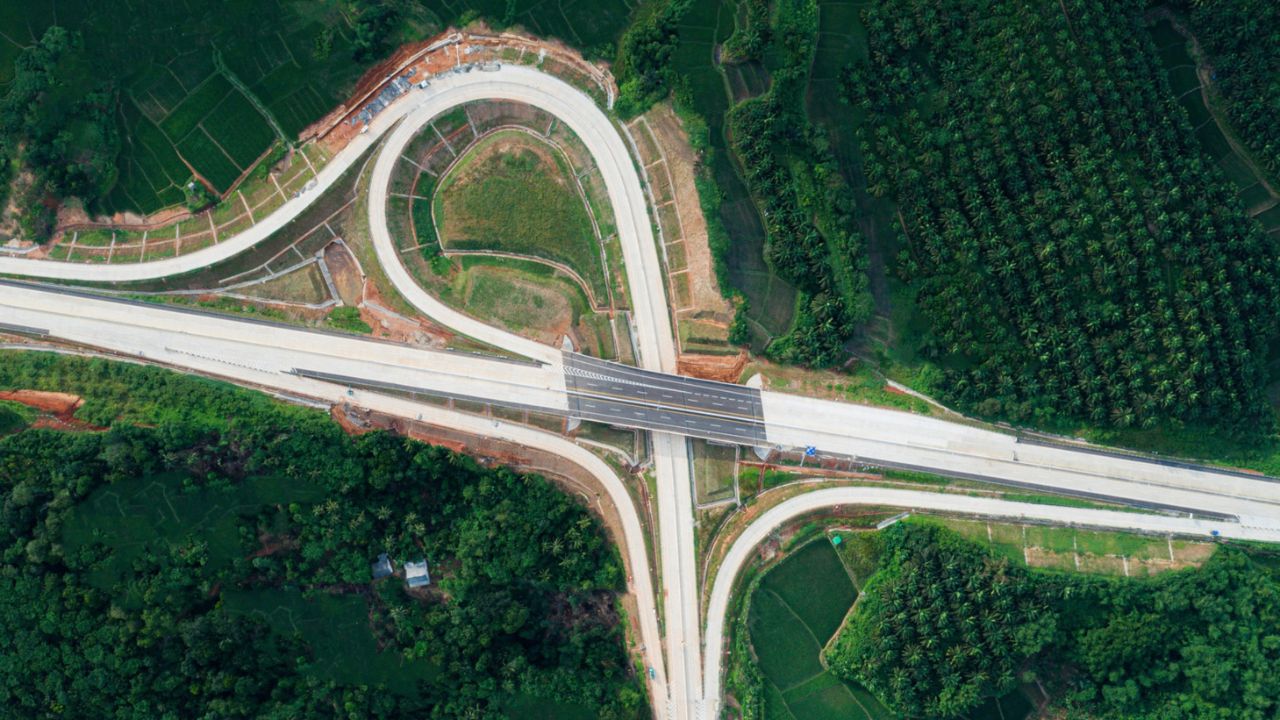

Highway infrastructure is rarely just about asphalt and geography; it is often the key that unlocks long-dormant economic potential. In Indonesia's Banten Province, the new Serang-Panimbang Toll Road is acting as a crucial catalyst, specifically accelerating the lucrative, highly sensitive vannamei shrimp aquaculture industry along the Pandeglang coast. This development is proving that targeted connectivity can transform regional geographic advantages into a globally competitive market force.
Built not solely to support the Tanjung Lesung Special Economic Zone, the Serang-Panimbang Toll Road holds broad implications for other burgeoning sectors, most notably the expanding vannamei shrimp farms. It serves as a vital "booster" for the industry's competitiveness. Pandeglang possesses a striking geographic advantage: a coastline stretching 300 to 307.0 kilometers (186.4 to 190.8 miles), which accounts for approximately 22 percent of the 1,405.0-kilometer (873.0-mile) southern coast of Java. The synergy between this vast coastal resource, the adoption of modern aquaculture technology, and the new logistical efficiency of the toll road will position Pandeglang as a fresh economic growth center in the national fisheries sector. For shrimp farmers and industry stakeholders, this infrastructure is the key to converting local potential into global achievement.
The scale of opportunity is immense. Pandeglang Regency holds approximately 2,750.0 hectares (6,795.4 acres) of potential land for vannamei shrimp cultivation. Currently, the existing utilized area covers 274.0 hectares (677.1 acres). The remaining 2,476.0 hectares (6,118.3 acres) offer a massive investment opportunity, with the largest cultivation areas situated in the Ujung Kulon region. This availability can provide significant opportunities for both foreign and local investors aiming to enter the vannamei shrimp market.
Designated as a National Strategic Project, the Serang-Panimbang Toll Road spans 83.67 kilometers (52.0 miles) across Banten Province and is divided into three sections intended to enhance connectivity to the Tanjung Lesung tourism area. Section 1, connecting Serang and Rangkasbitung over 26.5 kilometers (16.5 miles), has been operational since 2021. Section 2, a 24.17-kilometer (15.0-mile) stretch between Rangkasbitung and Cileles, was functionally utilized during the Lebaran holiday of 2026. Meanwhile, Section 3, stretching 33.0 kilometers (20.5 miles) from Cileles to Panimbang, remains under construction with a progress rate of 73.68 percent to date.

The Rangkasbitung Toll Gate, which is part of the Serang-Panimbang Toll Road in Lebak Regency, Banten Province: BPMI Setpres/Muchlis Jr
Optimization of high-value commodity logistics
Vannamei shrimp is a highly time-sensitive, perishable commodity. The final export quality—and consequently the selling price—will heavily depend on the speed of distribution from the ponds to the fish processing units. Overall, the global competitiveness of vannamei shrimp will increase when underpinned by robust logistics infrastructure.
The presence of the Serang-Panimbang Toll Road introduces a high-velocity cold chain, drastically reducing the travel time to freezing plants in Tangerang or export ports in Jakarta. This speed minimizes the risk of quality degradation during transit, ensuring the shrimp remain fresh or at a premium grade. Furthermore, there has recently been a surge in demand for live vannamei shrimp in the Jakarta market and its surrounding areas. Clearly, this geographical and infrastructural advantage provides a distinct competitive edge for farmers in Pandeglang.
Freight cost efficiency will also improve access and reduce the risk of delivery delays, which frequently lead to additional logistical expenses. By mitigating these costs, the profit margins of shrimp farmers become significantly healthier. This cost efficiency is a direct positive impact of the toll road's construction, which will simultaneously increase the broader mobility of human traffic and services. As a global comparison, China provides a tangible example where extensive toll road networks successfully lowered national logistics costs, culminating in highly competitive products dominating the global market.
Ease of access to fisheries production facilities (Saprokan)
The success of modern vannamei aquaculture, whether intensive or super-intensive, will depend heavily on precise technological and nutritional inputs. The new toll access facilitates the punctual distribution of high-quality shrimp feed and "benur" (shrimp fry) from central producers. Adhering strictly to feeding schedules and seeding times is critical in maintaining the shrimp's health and optimizing the feed conversion ratio (FCR) for growth performance.
Additionally, the mobilization of technology and the procurement of heavy machinery for pond construction, aeration systems, and IoT-based (Internet of Things) water quality sensors will become easier and cheaper due to smoother transportation routes. Consequently, the impact of the Serang-Panimbang Toll Road genuinely possesses a multiplier effect, rippling out to benefit all interconnected sectors both directly and indirectly.
The investment appeal of intensive cultivation
Pandeglang’s coastline features environmental parameters that highly support vannamei shrimp. The arrival of the toll road is shifting investor perception regarding the region. Equipped with toll connectivity, the local aquaculture industrial zone is driving a transformation from traditional farming methods to more highly productive, intensive ponds. This shift attracts both domestic and foreign investors eager to build sustainable aquaculture ecosystems across Pandeglang's expansive remaining coastal lands. Furthermore, the presence of the Tanjung Lesung Special Economic Zone and One-Horned Rhinoceros Conservation Tourism will add supplementary support to the competitiveness of the regency's shrimp cultivation.
Business scalability, facilitated by this ease of access, will make it highly possible for operators to efficiently manage multiple pond locations—or clusters—using centralized logistics. Supervision and monitoring of shrimp ponds within the coastal area will become easy and fast due to the excellent infrastructure connectivity. Notably, the travel time from Soekarno-Hatta International Airport to Pandeglang’s coast can now be covered in an average of 2 to 3 hours, a journey that previously could reach 4 to 6 hours.

Map of the Serang-Panimbang Toll Road in Banten Province showing the planned construction of three toll road sections spanning 83.677 km connecting Serang City, Rangkasbitung, to Panimbang with several main interchanges such as SS Cikeusal, SS Petir, SS Rangkasbitung, SS Cileles, SS Bojong, and the Panimbang Toll Exit: Buku Annual Report BPJT 2021
Elevation of biosecurity standards and export quality
International markets demand stringent biosecurity and traceability standards. Tighter quality control is now achievable; with rapid access, expert teams, veterinarians, and laboratory technicians can easily reach the ponds to conduct routine water quality and health checks, aiming to prevent disease outbreaks early. The opportunity for international certification, supported by robust infrastructure, will facilitate audits from global certification bodies. Ultimately, this will elevate the competitiveness of Pandeglang vannamei shrimp in demanding global markets such as the United States, Japan, and the European Union.
The national shrimp aquaculture industry faced a highly detrimental experience throughout 2025 and into early 2026, when Indonesian vannamei shrimp exports to the United States encountered a serious crisis due to the discovery of hazardous substances. Reports from the United States Food and Drug Administration (FDA) highlighted two primary issues: radioactive substance contamination and illegal antibiotic residues. Armed with that experience, solutions can be rapidly implemented if a similar problem occurs. Fast and easy infrastructure connectivity will enable international certification bodies to quickly provide solutions to such problems, safeguarding the industry's future.