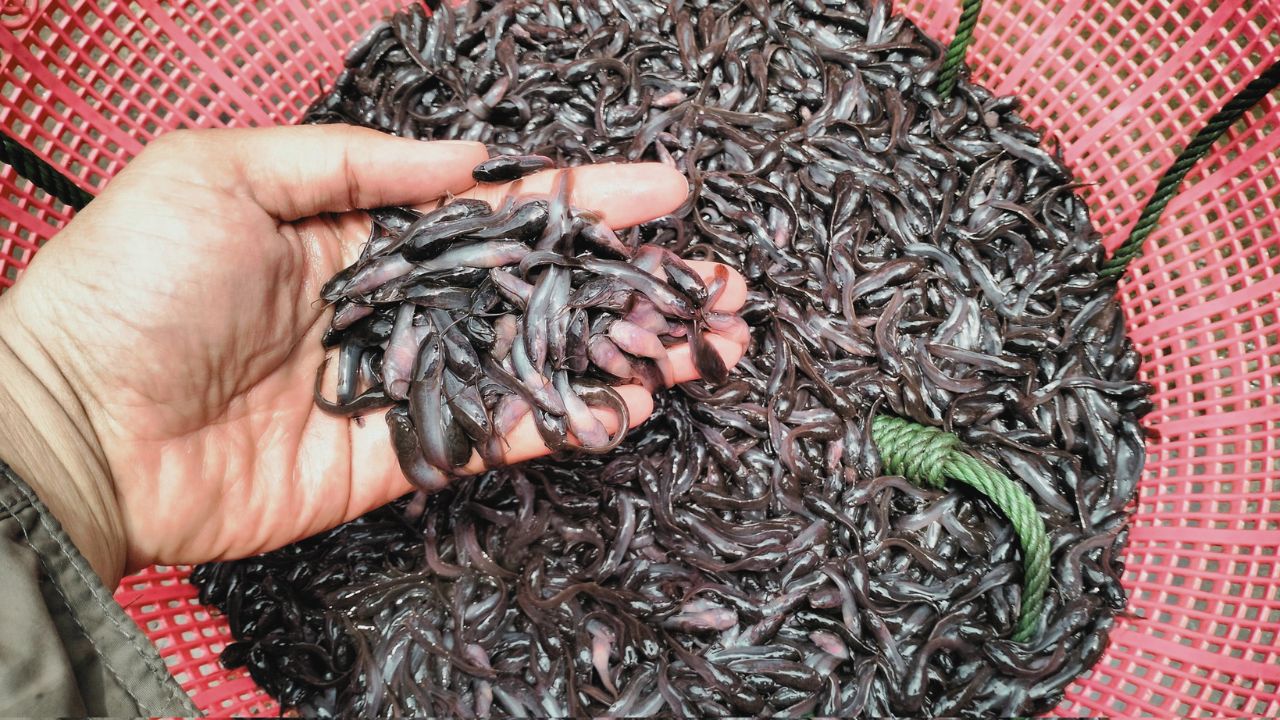

Indonesia’s ambitious Free Nutritious Meal program is quietly reshaping the nation's socio-economic landscape, transforming an initiative to feed millions of children into a massive catalyst for local aquaculture. By mandating local sourcing and strict quality controls, the multi-billion-dollar policy has sent ripples through the rural economy, fundamentally altering the market dynamics, price floors, and supply chains of the humble freshwater catfish.
The Free Nutritious Meal (MBG) program has transformed into a national strategic initiative occupying a central position as the main pillar of the current administration's policy. Implemented gradually since early 2025 and operating at full fiscal capacity in 2026, the program is managed directly by the National Nutrition Agency (BGN). The fundamental mission of the MBG program is to provide standardized and high-quality nutritional intake for Indonesia's future generations for free. At first glance, this budget allocation worth hundreds of trillions of rupiah is frequently assumed to be a state budget waste scheme or a purely consumptive program. However, macroeconomic analysis suggests that the MBG Program is a fiscal intervention that creates a massive multiplier effect, while simultaneously acting as a driving instrument for the National Food Security Program.
Government spending channeled through the MBG Program sends a positive signal regarding state administration, shifting the paradigm from passive expenditure to sustainable and equitable human capital investment. With an aggregate target of beneficiaries reaching more than 82 million people, Indonesia now registers itself as the organizer of the second-largest public nutrition program in the world after a similar initiative in India that began in 2001. The aquaculture ecosystem, particularly the catfish (Clarias sp.) commodity, is directly benefited by this policy architecture. A deterministic surge in demand forces all actors within the supply chain to adapt to the new market order.
To understand the scale of its impact, it is important to dissect the main components that form the operational backbone of the MBG Program:
Target audience
The program maps recipient demographics precisely, covering school students (starting from early childhood education, elementary, middle, to high school levels), students in Islamic boarding schools, as well as demographically vulnerable groups such as pregnant women, breastfeeding mothers, and toddlers.
Nutritional Fulfillment Service Unit (SPPG) System
Food is produced in a decentralized manner through central kitchen units (Kitchen Centers) spread evenly at the sub-district level. One service unit is generally calibrated to serve the nutritional needs of approximately 2,500 to 3,000 children daily.
Local sourcing (principle of locality)
The supply chain is built upon a regional economic protection policy, where primary raw materials such as rice, vegetables, eggs, and specifically freshwater fish commodities, must be absorbed directly from local farmers, livestock breeders, and fish cultivators located around the SPPG operational sites.

The socialization activity of the Fish Eating Popularization Movement (Gemarikan) and the MBG program by BRPBATPP Bogor was conducted for elementary school students in the Warung Menteng Village area, Cijeruk Subdistrict: Luhkan Kab. Bogor/Ricky Arsenapati
The multiplier effect on society
The MBG program extends far beyond the mere activity of "food distribution." This initiative restructures the socio-economic fabric of society and creates a wave of added value that expands into various strategic sectors:
1. Long-term human capital investment
The strategic objective of this program is to suppress the prevalence of stunting through precision nutritional interventions for pregnant women and toddlers. In parallel, a nutritional intake rich in protein and amino acids derived from catfish is designed to improve the learning concentration of children in schools. The fulfillment of balanced nutrition correlates directly with the endurance of cognitive focus in the classroom, which will ultimately elevate the quality of national education as well as the quality of the future labor force.
2. Popular economy and rural downstreaming
For the real sector, a guaranteed market is the greatest incentive. The certainty of catfish harvest absorption by the SPPG eliminates the risk of extreme price fluctuations that have historically haunted traditional markets. Furthermore, economic circulation also revitalizes micro, small, and medium enterprises (MSMEs) around the SPPG locations, creating thousands of new jobs that absorb local labor, ranging from nutritionists, cooks, and administrative staff, to logistics couriers.
3. Shifts in protein consumption culture
The inclusion of fish as a mandatory component on the MBG dining plate acts as an instrument of massive social engineering. This program educates the palate preferences of the younger generation, building nutritional literacy awareness that the fulfillment of high-quality animal protein (such as catfish) is far more essential compared to older dietary patterns dominated by excessive carbohydrate consumption.
4. Household expenditure savings
For families in the middle-to-lower deciles, the availability of free nutritious lunches at school removes one of their largest daily expenditure burdens. Funds that were previously allocated for packed lunches or children's pocket money can now be reallocated to stimulate consumption for other urgent needs, thereby strengthening the purchasing power and economic inclusivity of households.
Significant impacts on catfish supply chains and markets
As a key actor in the MBG supply chain, the catfish aquaculture sector responds to this sudden surge in demand with various structural dynamics that alter the national aquaculture roadmap.
Price stability and increased local market absorption
Even though an aggregate demand spike occurred to supply the SPPG kitchens, national catfish prices are observed to be relatively stable with a trend of strengthening margins at the breeder level (farm gate). The Ministry of Marine Affairs and Fisheries (KKP) asserts that the availability of seed supplies and national production capacity are still robust enough to support the regular needs of the public market alongside the projection of tens of millions of MBG portions. Prices at the breeder level are now finding a new equilibrium, ranging between Rp 20,000 to Rp 25,000 per kilogram, which is highly dependent on local logistical cost efficiency.
One of the most tangible empirical impacts is the consistent absorption of harvests by SPPG vendors. This certainty lifts daily sales volumes by up to three times. Aquaculture yields are now managed through a futures contract system, providing a safety net for small breeders who have long been vulnerable to cartel price manipulation in the open market.
Cutting distribution channels (the role of middlemen)
The MBG program forces a commercial revolution through supply chain efficiency. SPPGs procure supplies directly from local breeder associations or groups. This transformation drastically cuts the long distribution chains previously dominated by middlemen (tengkulak). As a result, the purchasing price at the breeder level can be pulled higher without destroying the Highest Retail Price (HET) at the final consumer level or burdening the BGN budget ceiling.
The urgency of quality standards and traceability
Access to the premium MBG market demands absolute compliance with quality. The MBG program mandates extremely strict traceability. This system requires breeders to meet food safety standards, such as a prohibition on the use of alternative feeds from unstandardized organic waste and an obligation to use 100 percent commercial pellet feed.
A viral incident in early March 2026, wherein SMA Negeri 2 Pamekasan rejected thousands of MBG portions due to the discovery of raw catfish from the vendor SPPG As-Salman, became a crucial turning point. This incident proves that the BGN does not offer compromises regarding violations of Standard Operating Procedure (SOP) hygiene and food safety. The KKP responded to this by accelerating the push for all partner breeders to possess Good Fish Cultivation Practices (CBIB) certification, which ensures that the catfish raised are safe for mass consumption.

MBG with a raw catfish side dish in Pamekasan
Price dynamics vs. production costs (feed challenges)
Since the program was initiated as a pilot project in late 2024 until full implementation with a massive budget injection in 2026, the national catfish price curve has experienced an exponential yet measured upward trend.

In early 2025, price escalation was largely triggered by market sentiment regarding operational cost adjustments, where the MBG program was still merely absorbing local production surpluses. However, entering the second and third quarters of 2025, a shift in the supply chain began to occur fundamentally. Breeder groups in the production centers of Java Island aggregately diverted their harvests to MBG vendors. The reduction of "free stock" in traditional markets slowly depressed retail prices until they reached a range of Rp 27,000 to Rp 28,000 per kilogram.
The most massive pressure occurred in the first quarter of 2026. The multiplied budget increased the number of SPPGs tenfold, creating a new Floor Price phenomenon. The price of Rp 22,000 per kilogram, which was previously considered a premium price at the farmer level, has now become the lowest benchmark. Data in April 2026 recorded that in Jakarta, the average price breached the figure of Rp 30,493 per kilogram. A similar phenomenon was recorded at the Intermoda Modern Market in BSD, where a local trader named Bayu (40) reported that even though the price is stable at the psychological figure of Rp 30,000 per kilogram, the pressure of supply scarcity for the daily retail market is heavily felt.
This commodity disruption did not only occur in Java but also radiated strongly to regional areas. In Pekanbaru City, Ahmaddin Margolang (52), a smoked catfish (lele salai) business operator, faced direct supply competition with MBG vendors. The absolute need for raw materials forced him to raise the absorption price from breeders, which was originally Rp 18,000, to Rp 21,000 per kilogram. Outside Java, logistical disparity challenges widened the price curve. A report from Zakiman (48), a hatchery practitioner in Seroja, Kutai Kartanegara Regency, noted that the price of consumption catfish at the breeder level had touched Rp 23,000 per kilogram, while at retail stalls it soared past Rp 35,000 per kilogram. However, this scarcity of consumption catfish triggered a positive effect in the form of an explosion in seed absorption by the community. More extreme logistical facts were revealed by Andreas Lawing (65) in the remote area of Long Masangat, East Kutai, where the catfish commodity breached the price limit of Rp 35,000 to Rp 40,000 per kilogram.
Main challenge: feed ecosystem efficiency
Amidst the euphoria of stable sales margins, the catfish aquaculture industry faces structural challenges in the Cost of Goods Sold (HPP) component. Manufactured feed costs dominate up to 60 to 70 percent of total operational costs. The obligation to halt alternative feeds to meet MBG hygiene standards makes dependency on manufactured pellet feed (ranging from Rp 10,500 to Rp 20,000 per kilogram) increasingly inevitable. This condition triggers a vital urgency to cultivate small and medium-scale independent feed bioprocess industries in various regions. Breeders are demanded to be able to engineer feed with a highly efficient Feed Conversion Ratio (FCR) to ensure that healthy profit margins are not eroded by high daily operational costs.
Conclusion and business mitigation
The Free Nutritious Meal (MBG) program has been empirically proven to be not merely a stunting eradication instrument, but rather a macroeconomic catalyst that ushers in a new era of margin certainty for the inland fisheries industry. Catfish breeders now hold a much stronger bargaining position within the market constellation thanks to massive-scale absorption demand fully supported by the state budget. However, to optimize this historical momentum, aquaculture business operators are demanded to transform their traditional mentalities toward modern governance.
The most rational business mitigation at this time rests on two pillars. First, absolute commitment to the implementation of traceability and operational certification in order to minimize food safety risks that could potentially sever cooperative contracts. Second, breeders must strengthen their efficiency management capabilities through independent feed production based on certified local resources. Only by balancing quality innovation downstream and feed cost efficiency upstream will the business profits of national catfish breeders continue to grow optimally amidst the strict standardization of the MBG Program.