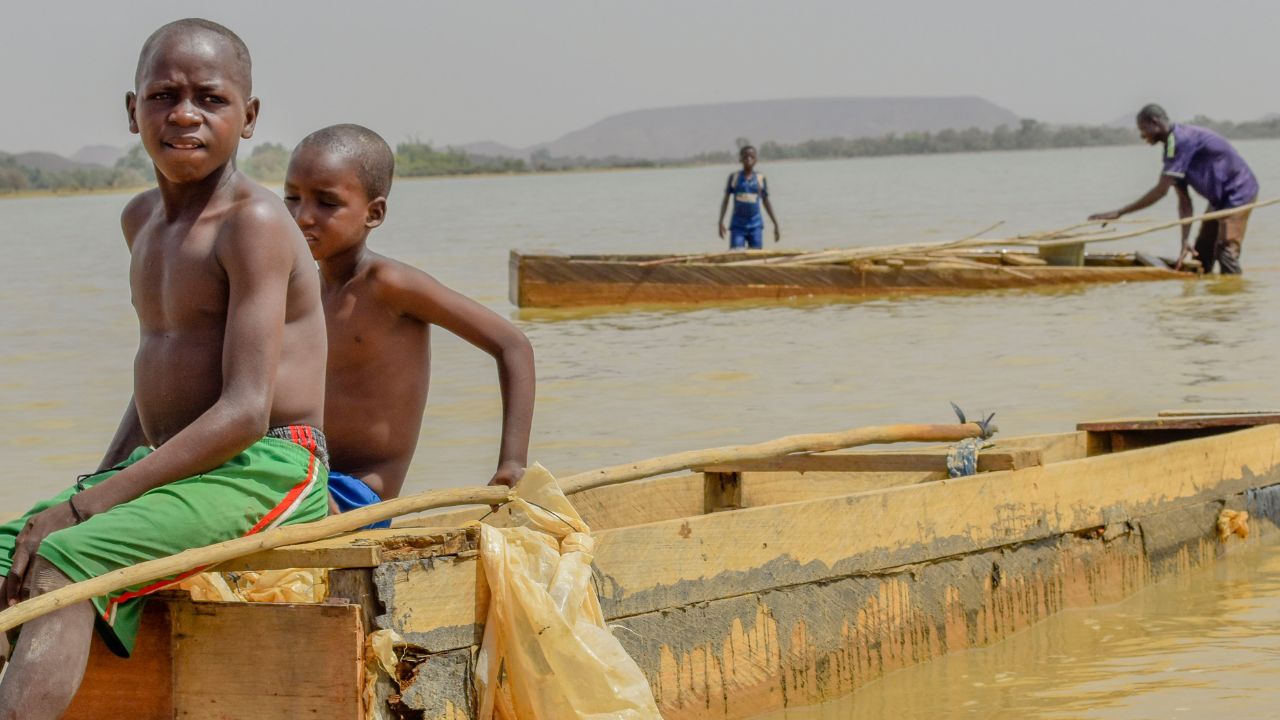

Facing increasingly extreme climate realities and global supply chain volatility, food sovereignty in the Sahel region can no longer be reduced to mere policy rhetoric. Burkina Faso, a landlocked country with complex hydrological challenges, is now redefining its food security architecture through an integrated, self-reliant agribusiness approach fully driven by the optimization of domestic resources. This transformation sidelines the old paradigm of heavy reliance on imported raw materials, replacing it with a circular economic ecosystem that marries the byproducts of the national agricultural industry with adaptive fisheries biotechnology. This comprehensive analysis dissects how state institutions and local biological resources in Burkina Faso converge to create an aquaculture sector that is resilient, efficient, and future-oriented, proving that geographical limitations can be engineered into a foundation for high-precision operational innovation.
OAPH 2023-2025 and the resurgence of water infrastructure
The blueprint for Burkina Faso’s agribusiness resurgence is officially calibrated through a government macro-initiative titled the Offensive Agropastorale et Halieutique, or OAPH, for the 2023 to 2025 implementation period. This program is a radical structural intervention designed to secure national food sovereignty amidst a Sahelian climate landscape heating up 1.5 times faster than the global average temperature. Extreme thermal conditions and increasingly uncertain precipitation patterns have forced the country to shift from vulnerable rain-fed agricultural systems toward measured and technically controlled water resource management. Through the OAPH framework, the government positions hydrological sovereignty as the absolute foundation for all agribusiness and aquaculture operations, ensuring that water availability is managed with high-level civil engineering and hydrogeological approaches.
To realize this monumental vision, the government of Burkina Faso has mobilized public capital investment worth more than 273 billion CFA francs (equivalent to USD 145 million), specifically directed toward the restructuring and revival of national water infrastructure and the strengthening of 8 strategic commodities, including fisheries. This massive allocation of funds is manifested through ambitious steps in building and rehabilitating 35 strategic dams scattered across various provinces, such as the Bapla, Kokologho, Gouloré, and Tandjari dams. The rehabilitation of this surface infrastructure not only serves as flood mitigation facilities during the very brief rainy season but also acts as giant reservoirs that lock in water volume for continuous use throughout the long dry season. The optimization of these reservoirs allows for the formation of new fish cultivation zones, including the implementation of floating net cages integrated with agricultural irrigation networks. This structural synergy creates agribusiness oases capable of year-round production without disruption from local climate volatility.

A panoramic view of the rehabilitated Kokologho Dam in Boulkiemdé Province: © DCRP / Primature (Modified)
Furthermore, the OAPH strategy expands into the strategic exploitation of deep groundwater reserves or fossil water aquifers. Much of Burkina Faso rests on Precambrian crystalline basement geological formations with low to medium groundwater productivity, demanding highly precise hydrogeological mapping. However, beneath certain geological layers, particularly those connected to the Liptako-Gourma and Taoudeni sedimentary basins, lie deep groundwater reserves essential for regional water security. Capital injections from the OAPH program are used to fund hundreds of large-scale deep well drilling projects to pump these aquifers. This move diversifies water sources so that aquaculture sectors located far from surface dams do not have a single point of failure. The utilization of fossil water is strictly calibrated through water quality and quantity monitoring to maintain ecological balance, providing a guarantee of stable hydrological supply for advanced hatchery facilities and grow-out ponds in remote areas. Through these comprehensive infrastructural maneuvers, Burkina Faso is laying an unshakeable physical foundation to engineer the arid Sahelian lands into self-sufficient aquatic ecosystems.
Formulating feed from SOFITEX fields
The success of commercial aquaculture operations is largely determined by the efficiency of the feed supply chain, which has historically been the highest cost component and the most vulnerable to global commodity price fluctuations. In Burkina Faso, the solution to breaking this dependence on imported feed was found at the heart of their own domestic agricultural economy: the cotton industry. Managed by the national entity Société Burkinabè des Fibres Textiles, or SOFITEX, which has now been fully nationalized by the state to secure strategic assets, the cotton industry is a macroeconomic backbone involving and supporting the lives of approximately 2,000,000 residents. With production levels capable of reaching 400,000 to 600,000 metric tons (881,849,048 to 1,322,773,572 pounds) of seed cotton during optimal harvest seasons, SOFITEX operates dozens of giant-capacity ginning facilities across the country, including the Bobo III facility located in Bobo-Dioulasso. Through the lens of circular innovation, the residue in the form of cottonseed cake from these ginning mills is re-engineered into premium raw materials for fish feed, creating a cross-sector synergy that is entirely self-reliant.

A scene at a cotton harvesting site, showing bales of clean white cotton fiber on the ground in front of a bright orange trailer container: Wikimedia Commons/MALARD Christine | CC BY-SA 4.0 (Modified)
Cottonseed cake possesses an impressively remarkable nutritional profile, with crude protein content reaching the range of 40 to 50 percent, making it a highly rational plant-based substitute for expensive imported fish meal or soybean meal. Despite its great potential, the utilization of cottonseed cake as aquaculture feed is faced with one major biochemical hurdle: the presence of gossypol. Gossypol is a toxic polyphenolic compound produced naturally and stored in the lysigenous glands of the cotton plant as a biological defense mechanism against pest attacks. In fish species, the consumption of free gossypol can trigger severe antinutritional effects, causing toxicity, inhibiting the absorption of essential amino acids, and drastically reducing growth rates. To neutralize this threat independently, Burkina Faso’s local agribusiness ecosystem applies a hybrid processing technique that combines mechanical extraction with simple yet high-precision chemical interventions.
This detoxification process is executed from the early stages at the ginning facilities through mechanical extraction methods using screw press technology. This process applies physical pressure and specific temperatures that not only extract cottonseed oil efficiently but also damage the cellular structure of the glands that bind the toxic compound. While these mechanical steps significantly degrade free gossypol levels, a follow-up intervention is required to achieve absolute safety levels for fishery commodities. That intervention is the supplementation of iron compounds. Specifically, ferrous sulfate is integrated into the feed formulation at an equivalent ratio of 1-to-1 against the remaining free gossypol molecules. At the molecular level, divalent cation ions from the iron aggressively bind to the aldehyde groups on the gossypol molecule, forming a robust, insoluble, and entirely biologically inert iron-gossypol complex. This complex compound then passes through the fish’s digestive tract without being absorbed by the intestinal walls and is safely excreted. This formulation has proven to be far superior and more efficient than the use of calcium hydroxide, which often damages the biological activity of vitamins in the feed. The integration of SOFITEX cotton industry waste through this iron supplementation method creates feed sovereignty using local raw materials and fundamentally lowers the operational cost structure for farmers, ensuring that profit margins remain circulated within Burkina Faso’s domestic economy.
The resilience of Clarias gariepinus
Precise hydrological infrastructure and cotton-based feed sovereignty would not yield optimal output without fishery commodities that possess absolute biological compatibility with the local ecosystem. The selection of species for Burkina Faso’s national aquaculture program was not dictated by export market trends but was based on a rational calculation of biological resilience and metabolic efficiency. Within these parameters, the African Catfish or Clarias gariepinus emerged as the most superior and logical species to be cultivated under the pressure of harsh Sahelian environmental conditions. The toughness of this commodity is no coincidence but rather a manifestation of evolutionary adaptation over millions of years in the waters of the African continent, which are prone to extreme climate fluctuations and periodic droughts. Its ability to survive, grow exponentially, and convert local plant proteins with high levels of efficiency makes it a primary biological asset for the successful implementation of the food security program.
The greatest aquatic challenge in the Sahel region is exposure to solar radiation and very high air temperatures, which directly trigger an increase in the water column temperature in cultivation ponds. Based on the principles of aquatic thermodynamics, as water temperature increases, the water's capacity to bind dissolved oxygen decreases drastically. In commercial cultivation facilities with high stocking densities, oxygen deficits or hypoxia are the leading cause of high mortality rates in conventional fish species. However, Clarias gariepinus possesses an extraordinary anatomical advantage to bypass these environmental limitations. The species is equipped with an arborescent organ, a supplementary breathing structure shaped like trees that is very rich in blood vessels and located in the suprabranchial cavity just above the main gills. This specialized respiratory organ allows the African Catfish to extract oxygen directly from the atmosphere. When dissolved oxygen levels in the water plummet to critical points due to heat stress, this fish will instinctively move to the surface to breathe free air, securing the respiration process without having to rely on mechanical aerator devices that consume large amounts of electrical energy.
This physiological characteristic provides massive capital efficiency and operational advantages for farmers in Burkina Faso. Without the burden of initial investment for artificial aeration infrastructure and complex water quality mitigation systems, farmers can allocate their working capital entirely toward expanding production volumes and procuring feed. Furthermore, Clarias gariepinus has a very high biological tolerance for fluctuations in water acidity levels and the accumulation of ammonia compounds, making it a highly resilient pelagic species when faced with pond management that is not yet fully modern at the rural level. The digestive anatomy of this fish is also highly adaptive to plant protein-based rations, so feed formulations dominated by cottonseed cake residues from SOFITEX can be digested and converted into muscle biomass with very satisfying feed conversion ratios. The rational exploitation of the genetic resilience of Clarias gariepinus allows Burkina Faso’s fisheries sector to mitigate the risk of harvest failure while maximizing production quantities amidst the challenges of regional warming temperatures.
State-driven nucleus-plasma safety nets
To ensure that all leaps in technical innovation, circular feed, and biological resilience can be funneled with precision down to the level of grassroots farmers, a strong, centralized, and empowerment-oriented institutional engineering is required. The government of Burkina Faso, through the Directorate General of Fisheries Resources or DGRH, designed and executed a business architecture that adapts the strategic Nucleus-Plasma (Inti-Plasma) partnership model. In this governance constellation, the state instrument does not merely act as a passive administrative regulator but positions itself actively as the "Nucleus" or the main economic driver that takes over the burden of high-risk, capital-intensive investments. This transformation of the DGRH’s institutional function is a fundamental step that ensures the supply chain from the upstream sector is managed with modern industrial precision standards, reducing the risk of production input shortages that often paralyze agricultural initiatives in developing countries.
As the driving force or Nucleus, the DGRH consolidates centralized feed manufacturing facilities to formulate and distribute high-nutrient rations based on cotton residues to the entire network of smallholder farmers. Simultaneously, the institution established national-scale modern hatchery facilities specifically designed to reach a production capacity target of 12,000,000 fingerlings per year. The construction of these giant-capacity hatchery facilities is a key infrastructure for maintaining the genetic integrity and quality of Clarias gariepinus throughout the country. Through centralized hatching managed by local geneticists, the DGRH can strictly monitor survival rates, standardize growth rates, and prevent genetic degradation or inbreeding, which is highly prone to occur if the spawning process is left entirely to traditional farmers with minimal laboratory equipment. Millions of certified superior fingerlings and affordable circular feed are then structurally distributed to local farmers, farmer groups, and village cooperatives that play a crucial role as "Plasma" elements in the fisheries ecosystem.
At the downstream end of the supply chain, the trade architecture orchestrated by the DGRH is equipped with a financial risk mitigation instrument that serves as the lifeblood of rural farmers' economic sustainability, namely the off-take guarantee. Smallholder fisheries industries are often devastated by extreme market price fluctuations during peak harvest seasons, where an abundance of supply not balanced by logistical absorption capacity can suppress the commodity's selling price far below the break-even production cost. To protect Plasma farmers from such speculative distortions, the government initiated a direct purchase protocol where state facilities guarantee the absorption of harvests at a price threshold set with a rational profit margin. This protection frees farmers from the anxiety of price negotiations in the free market, allowing them to dedicate their focus entirely to improving daily operational efficiency. This combination of upstream and downstream interventions has resulted in an exponential surge in production volume, where national halieutic production has jumped sharply from a limit of 1,000 metric tons (2,204,622 pounds) to more than 17,000 metric tons (37,478,584 pounds) per year, with a very directed roadmap toward achieving an ambitious target of 100,000 metric tons (220,462,262 pounds) per year. This state-driven Nucleus-Plasma architecture creates a solid economic equilibrium, integrating volume growth with improved social welfare.
Post-harvest independence and rural value chains
The final step to lock in and multiply economic value-add within Burkina Faso’s aquaculture ecosystem lies in operational independence in the post-harvest sector. Fresh fishery products are highly perishable biological commodities, and in the vast rural stretches of the Sahel, limited access to adequate cold chain infrastructure and stable electricity supplies can trigger massive post-harvest losses. If the fish biomass is not immediately distributed or processed within hours after being harvested from the grow-out ponds, the rate of enzymatic and bacteriological decomposition will destroy the entire value of the capital investment planted over months. To bypass these physical logistical barriers, the post-harvest strategy in Burkina Faso focuses on the implementation of village-level precision processing technologies that are completely independent of artificial cooling energy consumption, effectively turning geographical challenges into strategic opportunities for high-value product downstreaming.
The epicenter of innovation at this stage is the standardization and modernization of fish smoking techniques and fillet production, which directly resolves the issue of short product shelf life. Calibrated smoking processes not only function to extract moisture from the fish's muscle tissue, thereby stopping the activity of spoilage microorganisms, but also deposit essential phenolic compounds from wood smoke that act as high-level natural antioxidant and antimicrobial agents. The result of this biochemical modification is export-quality smoked catfish capable of maintaining its nutritional integrity in hot room temperatures for weeks. This product stability allows the fisheries distribution network to reach all corners of the provinces without relying on fleets of refrigerated trucks that incur large capital costs. On the other hand, fillet-making initiatives respond to modern urban market demand for ready-to-cook boneless protein products, while simultaneously applying a zero-waste principle where remaining organs and fish skeletons from the cutting process are collected to be processed into subsidiary fish meal for animal feed.

A close-up view of several dark, dried, and curled smoked catfish from the Tapoa River, Burkina Faso: Wikimedia Commons/Marco Schmidt | CC BY-SA 3.0 (Modified)
This micro-level post-harvest industrialization directly catalyzes a radical socio-economic multiplier effect on the rural demographic structure. Operational processes ranging from cleaning, precision cutting, and smoking to sorting and vacuum packaging have given birth to a new employment ecosystem that exclusively absorbs the capacity of the female workforce in rural areas. The involvement of women in this value-added chain is not merely a matter of job provision but is a real economic empowerment instrument that decentralizes the circulation of money directly to the household level. The increase in income managed by women correlates directly with strengthened family purchasing power, improved domestic nutritional standards, and enhanced quality of children's education. By taking full control over the entire aquaculture life cycle from fingerling genetics and circular cotton feed to the distribution of smoked fish to consumer markets Burkina Faso has successfully demonstrated a comprehensive development model. This initiative affirms that true food sovereignty is a long process of building climate resilience, economic independence, and social dignity through an internally calibrated agribusiness ecosystem.